Gesture Recognition Technology

Table of Contents:


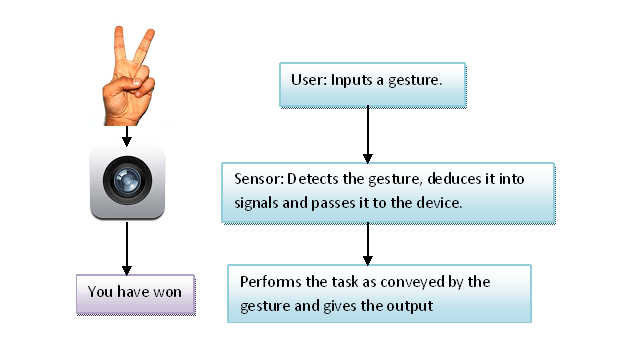
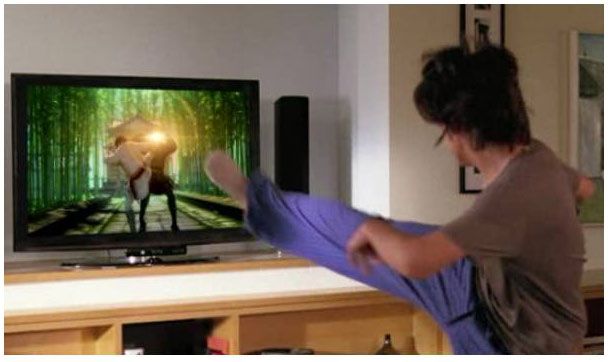
“Have you seen the remote?” “I left it on the table after watching my matinee show”. “It is not here, I will miss the news again because of you!!!” In the near future, such heated discussions over remote control won’t disturb the harmony of the house. Not because they will place it correctly but because soon remote controls will be the objects of the past. Technology has finally reached that dimension when our hands will take over the job and replace them by directly communicating with the computer or television. For instance, in order to delete a folder or file from the computer, place your palm on it, and throw it like a paper in a dustbin. Even while using the microwave oven to bake a cake, waving our hands in the air like a magician would serve as a command for the oven. Gesture Recognition While some of us might be thinking of it being a futuristic vision, some of us have already experienced it through what we call “Gesture Recognition Technology
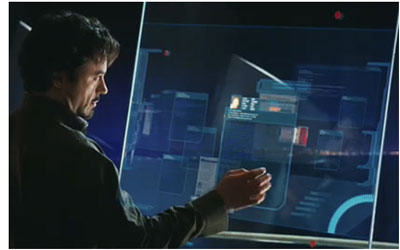
 
Since the time that the computer revolution started, human computer interaction has always been attempted to improve. Computers have now become an integral part of our lives and hence their usage should be as trouble-free as talking to someone is. Earlier the way humans interacted with this smart machine was either through keyboard or a mouse. But now attempts are being made to make the man-machine interaction as natural as possible. Fulfilling this requirement is the popular touch screen technology which is soon expected to be replaced by the gesture recognition technology.
Let us take a deep insight of this wonderful technology.
WHAT IS GESTURE?
As per Oxford Concise Dictionary 1995, gesture is defined as “a movement of a limb or the body as an expression of thought or feeling”.  Similarly, Random House de?ned “gesture” as “the movement of the body, head, arms, hands, or face that expresses an idea, opinion, emotion, etc.”
 
Kurtenbach and Hulteen defined it as “A gesture is a motion of the body that contains information. Waving goodbye is a gesture. Pressing a key on a keyboard is not a gesture because the motion of a finger on its way to hitting a key is neither observed nor significant. All that matters is which key was pressed”.
 
Human gestures are undoubtedly natural. They may often prove more efficient and powerful as compared to various other modes of interaction.  Tracking a head/hand or a body position or configuration may be quite valuable for controlling objects/systems or for feeding input parameters to the system. Gestures may also be used for expressing yourself. As an example, nodding may serve to communicate your consent or agreement, raising a finger may be a sign of your wish to interrupt, saying “huh” may indicate “I’m with you, continue”. Gesture recognition involves tracking of a human position, orientation or movement and finally interpretation of the same so as to recognize semantically consequential gestures.
 
Gestures and gesture recognition are terms increasingly encountered in discussions of human-computer interaction. Often, people use the term for character recognition, the recognition of proof readers symbols, shorthand, and various other forms of interaction. In fact every physical action involves a gesture of some sort in order to be articulated.
 
Gestures are communicative, meaningful body motions – i.e., physical movements of the fingers, hands, arms, head, face, or body with the objective to convey information or interact with the environment.
 
Cadoz described three functional roles of human gesture:
• Semiotic          – to communicate meaningful information.
• Ergotic            – to manipulate the environment.
• Epistemic        – to discover the environment through tactile experience.
 
Gestures are used to convey information in variety of ways. An emotion of sadness can be conveyed through facial expression, a lowered head position, drooped shoulders, and lethargic movement. Similarly, a gesture to indicate “Stop!” can be communicated with the help of a raised hand with the palm facing forward, or an exaggerated waving of both hands above the head.  Since there exists a many-to-one mapping from concept to gesture, gestures may often be ambiguous; at the same time, there also exists many-to-one mapping from gesture to concept and hence gestures are not completely specified.  As speech and handwriting vary from one individual to other, gestures are also subjective.  They vary among individuals and they vary from instance to instance for a particular individual
 
Though gestural communication is rich, it is equally complex. Researchers have differentiated them in different ways.  Kendon described a “gesture continuum,” defining five different kinds of gestures:
• Gesticulation.
Spontaneous movements of the hands and arms that are accompanied by speech.
• Language-like gestures.
Gesticulation integrated into a speech, replacing a particular spoken word or phrase.
• Pantomimes.
Gestures that depict objects or actions, with or without accompanying speech.
• Emblems.
Gestures like “V for victory”, “thumbs up” and assorted rude gestures
• Sign languages.
Well defined Linguistic systems such as American Sign Language. Explained below are alphabets “A”, “C” and “F”.
                                             
Spontaneous gestures (gesticulation in Kendon’s Continuum) make up some 90% of human gestures. People make use of gestures even while talking on telephone, blind people commonly gestures while talking.  Across cultures, speech-associated gesture is natural and common. Despite this, emblematic gestures and sign languages, although perhaps less spontaneous and natural, carry more clear semantic meaning and may be more appropriate for the kinds of command-and-control interaction.
 

Comments (5)

i like this

i like this technology......


plz give me the details of

plz give me the details of this project. actully this is my final year project


great job!!!  

great job!!!


plz sugget me any idea

plz sugget me any idea related to final year project .i want to use this technology.plz guide me.


i like to learn more about

i like to learn more about gesture technology..Im planning to do my project in this