Engineers Garage

  • Electronic Projects & Tutorials
    • Electronic Projects
      • Arduino Projects
      • AVR
      • Raspberry pi
      • ESP8266
      • BeagleBone
      • 8051 Microcontroller
      • ARM
      • PIC Microcontroller
      • STM32
    • Tutorials
      • Sensor Series
      • Engineering Deep Dives
      • AI
      • ARDUINO Compatible Coding
      • Audio Electronics
      • Battery Management
      • Beginners Electronics Series
      • Brainwave
      • Digital electronics (DE)
      • Electric Vehicles
      • EMI/EMC/RFI
      • EVs
      • Hardware Filters
      • IoT tutorials
      • LoRa/LoRaWAN
      • Power Tutorials
      • Protocol
      • Python
      • RPI Python Programming
      • Sensors
      • USB
      • Thermal management
      • Verilog
      • VHDL
    • Circuit Design
    • Project Videos
    • Components
  • Articles
    • Tech Articles
    • Insight
    • Invention Stories
    • How to
    • What Is
  • News
    • Electronic Product News
    • Business News
    • Company/Start-up News
    • DIY Reviews
    • Guest Post
  • Forums
    • EDABoard.com
    • Electro-Tech-Online
    • EG Forum Archive
  • DigiKey Store
    • Cables, Wires
    • Connectors, Interconnect
    • Discrete
    • Electromechanical
    • Embedded Computers
    • Enclosures, Hardware, Office
    • Integrated Circuits (ICs)
    • Isolators
    • LED/Optoelectronics
    • Passive
    • Power, Circuit Protection
    • Programmers
    • RF, Wireless
    • Semiconductors
    • Sensors, Transducers
    • Test Products
    • Tools
  • Learn
    • eBooks/Tech Tips
    • Design Guides
    • Learning Center
    • Tech Toolboxes
    • Webinars & Digital Events
  • Resources
    • Digital Issues
    • EE Training Days
    • LEAP Awards
    • Podcasts
    • Webinars / Digital Events
    • White Papers
    • Engineering Diversity & Inclusion
  • Guest Post Guidelines
  • Advertise
  • Subscribe

Insight – How Mobile Phone Charger works

By Ashutosh Bhatt August 29, 2011


Mobile phones are very common these days and so mobile chargers too. Most of us use it in daily life. In fact they are used to charge the batteries inside the mobiles by providing them a low level DC voltage and current. There may be different types of chargers used to charge different mobile phones but the key functioning of those all are almost same.
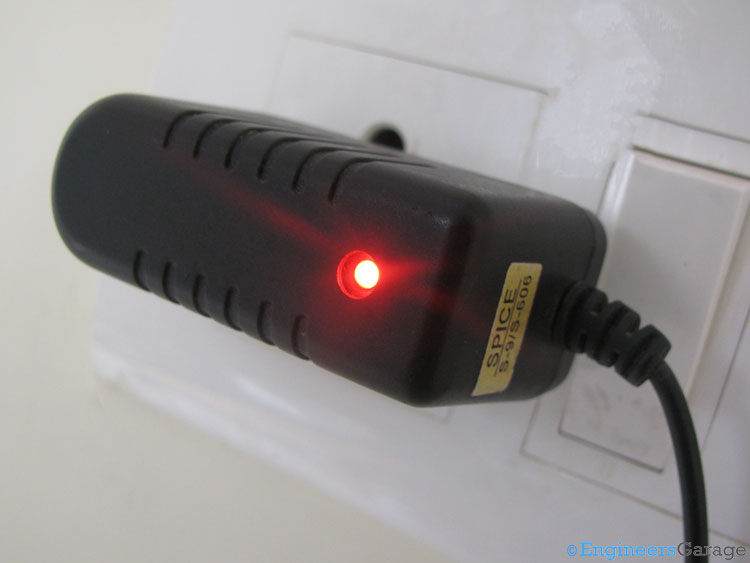
 
Image of a Mobile Charger
 
Fig. 1: Image of a Mobile Charger
 
The above image shows a commonly used mobile charger.

PCB with Components

PCB Circuitry of Mobile Charger
 
Fig. 2: PCB Circuitry of Mobile Charger
 
On opening the outer screws, we can see the PCB having majority of the components as shown in the image above.
 
Four Diodes Imbibed in Mobile Charger PCB
 
Fig. 3: Four Diodes Imbibed in Mobile Charger PCB
 
Four diodes shown in the upper image are arranged to make a full wave rectifier circuit. The working of the rectifier is explained later in the article.

Other Components

PCB Circuitry Components---Capacitors, Transistors, Diodes, and Resistors
 
Fig. 4: PCB Circuitry Components—Capacitors, Transistors, Diodes, and Resistors
 
The above image gives a clear look to the components that are used in the circuitry – capacitors, transistors, diodes and resistors.
 
 
Pulse Transformer of Mobile Charger
 
Fig. 5: Pulse Transformer of Mobile Charger
 
A pulse transformer shown in the above image is a special purpose transformer.

Working

LED of Mobile Charger
 
Fig. 6: LED of Mobile Charger
 
When charger is connected with the AC supply, the LED starts glowing to indicate the proper operation of the charger.
Working
Latest mobile chargers are kind of power supply units that use the Switched Mode Power Supply (SMPS) technology. To understand the working phenomenon of a mobile charger, we need to understand the concept of Power Supply Unit (PSU). PSU is a device that transfers electrical energy from one end to another by changing its fundamental characteristics according to the requirements. Example of a PSU is an application that converts AC mains voltage to regulated DC voltage. PSUs can be of two types depending on the mode of operation – Linier and Switching.
 
In these switching mode chargers, energy transfer is done by continuously switching electrical components (inductor, capacitor, etc) on and off. We can control the output voltage/current by varying the duty cycle, frequency or the corresponding phase. Using the SMPS technology makes the chargers smaller and lighter by elimination of low frequency transformers. It also presents a greater efficiency than the conventional methods which uses bulky transformers.
 
The AC supply first enters through the line filters in the charger. Line filters are the kind of electronic filters that are placed between an electronic device and an external line to alter/attenuate the electromagnetic interference effect. Now filtered signal are made to pass through the full wave bridge rectifier circuit. Rectifier converts the AC voltage to DC.
 
Output DC voltage from rectifier circuit passes through the PFC (Power Factor Correction) circuit which operates power circuits at their maximum efficiency. Further the voltage signal is transferred to the pulse transformer that is a special type of transformer optimized to produce rectangular electrical pulses.
 
Pulse transformers are categorized into two categories – power and signal transformers. The one used here is a power transformer. It reduces the voltage level of the input power and gives a low voltage power that is exactly required to charge the battery.


Filed Under: Insight
Tagged With: adaptor, charger, mobile phone, Mobile Phone Charger, transformer
 

Next Article

← Previous Article
Next Article →

Questions related to this article?
👉Ask and discuss on EDAboard.com and Electro-Tech-Online.com forums.


Tell Us What You Think!! Cancel reply

Log in to leave a comment:

Lost your password?

Don't have an account? Register here

Submit a Guest Post

submit a guest post

EE TECH TOOLBOX

“ee
Tech Toolbox: Sensors
In this Tech Toolbox, we cover some of those technologies driving the next generation of connected systems, including ultra-low-power sensing strategies that extend node battery life, and 60 GHz CMOS radar for contactless health and presence detection.

EE Learning Center

EE Learning Center
“engineers
EXPAND YOUR KNOWLEDGE AND STAY CONNECTED
Get the latest info on technologies, tools and strategies for EE professionals.

HAVE A QUESTION?

Have a technical question about an article or other engineering questions? Check out our engineering forums EDABoard.com and Electro-Tech-Online.com where you can get those questions asked and answered by your peers!


RSS EDABOARD.com Discussions.

  • what is missing from this circuit?
  • how RS-485 transmits and receive logic levels between two MCUs
  • Enhancing Boost Converter Efficiency: From Practical Limitations to a Series-Boost Differential Topology
  • Analyses and design of LDO
  • Problem Designing a Li-ion Battery Charging and Discharging Circuit

RSS Electro-Tech-Online.com Discussions

  • Oshon Basic, programing IF statements
  • USBASP Programming problems
  • What is the most suitable light source for making a book light like this?
  • My Advanced Realistic Humanoid Robots Project
  • Transistor K2 X T5

Featured Tutorials

Learn - VHDL Tutorials (22 Part)

  • VHDL Tutorial – 11: Designing half and full-subtractor circuits
    VHDL Tutorial – 11: Designing half and full-subtractor circuits
  • VHDL Tutorial – 12: Design a 8-bit parity generator and circuit checker
    VHDL Tutorial – 12: Design a 8-bit parity generator and circuit checker
  • VHDL tutorial 13: Design 3×8 decoder and 8×3 encoder using VHDL
    VHDL tutorial 13: Design 3×8 decoder and 8×3 encoder using VHDL
  • VHDL Tutorial 14: Design 1×8  demultiplexer and 8×1 multiplexer using VHDL
    VHDL Tutorial 14: Design 1×8  demultiplexer and 8×1 multiplexer using VHDL
  • VHDL Tutorial 17: Design a JK flip-flop (with preset and clear) using VHDL
    VHDL Tutorial 17: Design a JK flip-flop (with preset and clear) using VHDL
  • VHDL Tutorial 18: Design a T flip-flop (with enable and an active high reset input) using VHDL
    VHDL Tutorial 18: Design a T flip-flop (with enable and an active high reset input) using VHDL
More Tutorials >

Recent Articles

  • 3D scanning: How photogrammetry is reshaping digital engineering
  • EPC launches 3-phase GaN motor-drive boards
  • TDK launches 30 nH DC-link capacitors
  • Amphenol RF launches 40 GHz solderless connectors
  • STMicroelectronics adds 200g vibration sensor for factories

EE ENGINEERING TRAINING DAYS

engineering
Engineers Garage
  • Analog IC TIps
  • Connector Tips
  • Battery Power Tips
  • EDABoard Forums
  • EE World Online
  • Electro-Tech-Online Forums
  • EV Engineering
  • Microcontroller Tips
  • Power Electronic Tips
  • Sensor Tips
  • Test and Measurement Tips
  • 5G Technology World
  • Subscribe to our newsletter
  • About Us
  • Contact Us
  • Advertise

Copyright © 2026 WTWH Media LLC. All Rights Reserved. The material on this site may not be reproduced, distributed, transmitted, cached or otherwise used, except with the prior written permission of WTWH Media
Privacy Policy

Search Engineers Garage

  • Electronic Projects & Tutorials
    • Electronic Projects
      • Arduino Projects
      • AVR
      • Raspberry pi
      • ESP8266
      • BeagleBone
      • 8051 Microcontroller
      • ARM
      • PIC Microcontroller
      • STM32
    • Tutorials
      • Sensor Series
      • Engineering Deep Dives
      • AI
      • ARDUINO Compatible Coding
      • Audio Electronics
      • Battery Management
      • Beginners Electronics Series
      • Brainwave
      • Digital electronics (DE)
      • Electric Vehicles
      • EMI/EMC/RFI
      • EVs
      • Hardware Filters
      • IoT tutorials
      • LoRa/LoRaWAN
      • Power Tutorials
      • Protocol
      • Python
      • RPI Python Programming
      • Sensors
      • USB
      • Thermal management
      • Verilog
      • VHDL
    • Circuit Design
    • Project Videos
    • Components
  • Articles
    • Tech Articles
    • Insight
    • Invention Stories
    • How to
    • What Is
  • News
    • Electronic Product News
    • Business News
    • Company/Start-up News
    • DIY Reviews
    • Guest Post
  • Forums
    • EDABoard.com
    • Electro-Tech-Online
    • EG Forum Archive
  • DigiKey Store
    • Cables, Wires
    • Connectors, Interconnect
    • Discrete
    • Electromechanical
    • Embedded Computers
    • Enclosures, Hardware, Office
    • Integrated Circuits (ICs)
    • Isolators
    • LED/Optoelectronics
    • Passive
    • Power, Circuit Protection
    • Programmers
    • RF, Wireless
    • Semiconductors
    • Sensors, Transducers
    • Test Products
    • Tools
  • Learn
    • eBooks/Tech Tips
    • Design Guides
    • Learning Center
    • Tech Toolboxes
    • Webinars & Digital Events
  • Resources
    • Digital Issues
    • EE Training Days
    • LEAP Awards
    • Podcasts
    • Webinars / Digital Events
    • White Papers
    • Engineering Diversity & Inclusion
  • Guest Post Guidelines
  • Advertise
  • Subscribe