3D technology began with a simple vision: to recreate real-world objects digitally with precision. Early CAD workflows required engineers to manually recreate physical objects, making the process slow, labor-intensive, and prone to error, particularly when dealing with complex geometries.
The emergence of 3D scanning transformed this workflow by enabling engineers to capture the shape and dimensions of physical objects directly and convert them into digital models.

Figure 1. The evolution of 3D scanning, from manual measurement to digital modeling.
Why 3D scanning made such an impact
The introduction of 3D scanning significantly accelerated the transition from physical objects to digital models. Instead of recording individual measurements, scanners could capture millions of data points within seconds, creating highly accurate digital representations of real-world objects.
This capability opened new possibilities across many industries. Medical professionals could design custom implants, manufacturers could reproduce worn or obsolete parts, and archaeologists could preserve historical artifacts digitally for future generations.
3D scanning created a direct connection between the physical and digital worlds, allowing engineers, designers, and researchers to work with real-world geometry more efficiently than ever before.
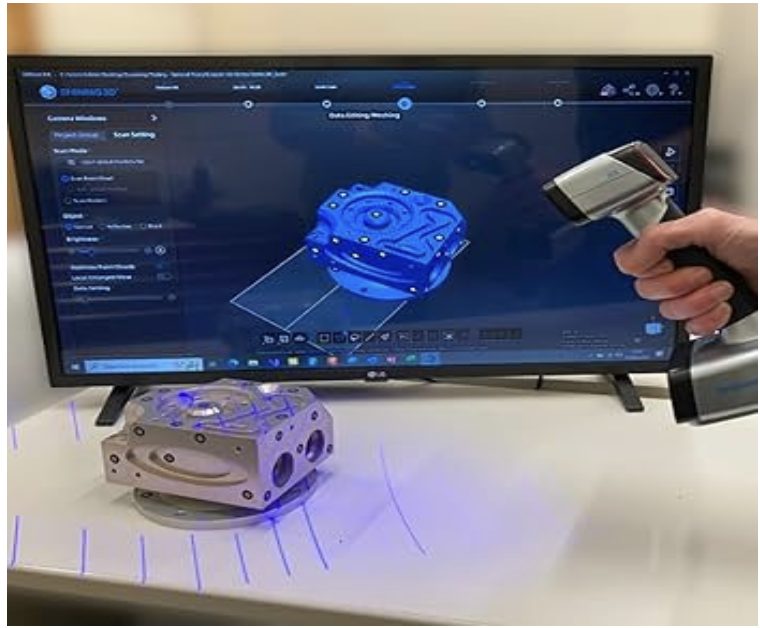
Figure 2. 3D scanning enables accurate digital models for engineering and industrial applications.
Photogrammetry: Game-changing technology
Among modern scanning technologies, photogrammetry stands out for its affordability, flexibility, and scalability. Unlike laser or CT scanning, photogrammetry relies on multiple overlapping photographs that are processed through software to generate highly detailed, textured 3D models.
Several 3D scanning technologies have emerged over the years, each offering unique advantages and limitations. Understanding these approaches helps explain why photogrammetry has become such a widely adopted solution.
Laser scanning: Precision in 3D measurement
Laser scanning is a highly accurate 3D data-capture technology used to measure the shape, size, and geometry of physical objects or environments. It works by projecting laser beams onto a surface and measuring the time it takes for the reflected light to return to the sensor, a principle known as Time-of-Flight (ToF). Some advanced systems also use phase-shift technology for faster and more precise measurements.
The scanner captures millions of individual data points, collectively known as a point cloud, which forms a detailed digital representation of the scanned object. This data can then be converted into 3D models for analysis, design modification, or documentation.
Laser scanning is widely used across architecture, engineering, manufacturing, construction, and heritage preservation. Engineers use it for reverse engineering and quality inspection, while architects rely on it to create accurate building models. It is also extensively used in infrastructure projects for mapping roads, bridges, and industrial facilities.
One of its major advantages is its exceptional precision, often achieving millimeter-level accuracy. However, laser scanning systems are expensive and can struggle with reflective, transparent, or highly absorbent surfaces. Outdoor scanning can also be affected by weather and lighting conditions.
Despite these limitations, laser scanning remains one of the most reliable technologies for high-precision 3D measurement and digital reconstruction.

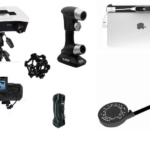
Figure 3. Laser scanning systems generate point-cloud data for high-precision measurement.
Structured light scanning: Fast and detailed 3D capture
Structured light scanning is an advanced 3D scanning technique that captures the shape and surface details of an object by projecting a series of light patterns, usually grids or stripes, onto it.
Cameras positioned at fixed angles observe how these patterns deform when they fall on the object’s surface. Specialized software analyzes these distortions to calculate depth and reconstruct an accurate 3D digital model.
This method is known for its high speed and excellent surface detail, making it ideal for capturing small to medium-sized objects with complex geometries. Unlike laser scanning, which measures individual points sequentially, structured light scanning captures larger areas simultaneously, significantly reducing scanning time.
Structured light scanning is widely used in industrial inspection, product design, reverse engineering, healthcare, and animation. Manufacturers use it for quality control, while medical professionals rely on it for custom prosthetics and dental modeling. It is also widely used in visual effects and game development to create realistic digital assets.
Its main advantages include speed, accuracy, and the ability to capture fine surface details. However, it performs poorly in bright sunlight because external light interferes with the projected patterns. Reflective or transparent surfaces can also reduce accuracy.
Despite these challenges, structured light scanning remains one of the most efficient methods for detailed 3D surface reconstruction.
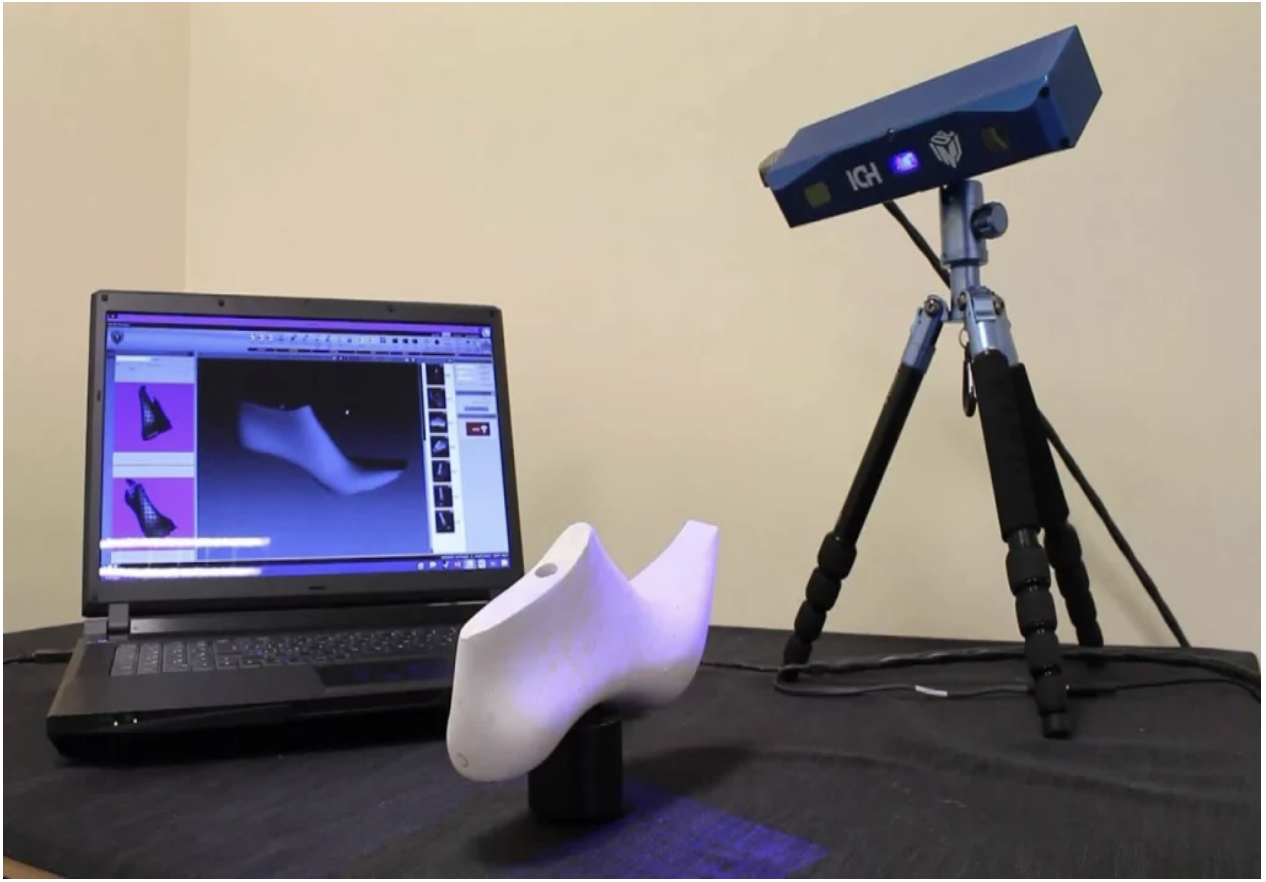
Figure 4. Structured light scanning captures surface geometry using projected light patterns.
Comparing 3D scanning methods
At the high end of the market, CT scanning provides the ability to see the exterior and interior structure of an object using X-rays. However, its cost, scale, and safety requirements limit its use primarily to medical, aerospace, and specialized industrial applications.

Figure 5. CT scanning creates detailed internal and external digital representations using X-rays.
In contrast, photogrammetry has emerged as one of the most accessible and versatile 3D scanning methods available today. By capturing multiple photographs from different angles and processing them with specialized software, photogrammetry can generate highly detailed 3D models without requiring expensive scanning equipment.
The technique works well with complex shapes, scales effectively to large structures through drone-based imaging, and offers a strong balance of accuracy, cost, and usability. While it does require suitable lighting conditions and significant processing power, photogrammetry remains a practical solution for many applications.

Figure 6. Photogrammetry generates 3D models from multiple overlapping photographs.
Versatile 3D scanning
Beyond geometry, photogrammetry captures the full visual character of an object. The resulting models include not only shape but also textures, colors, and fine surface details, creating highly realistic digital assets.
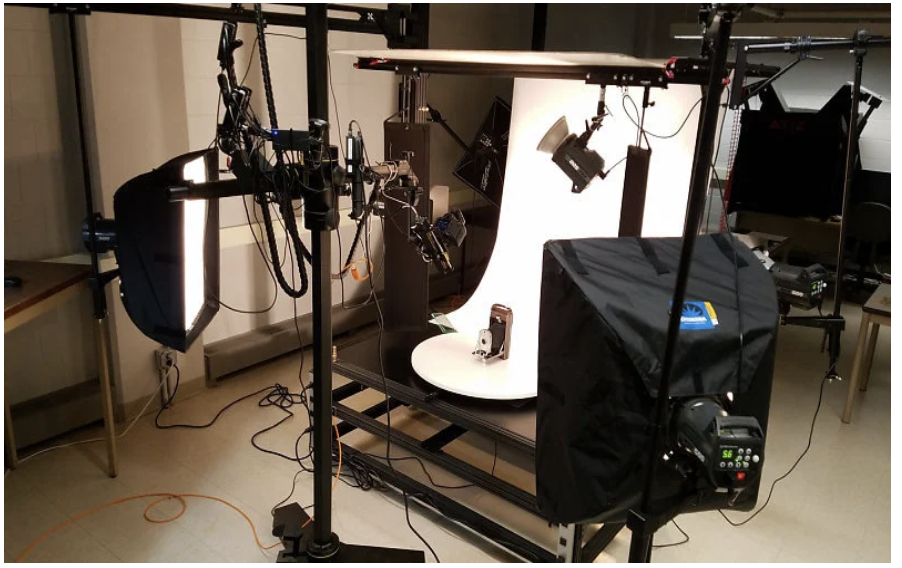
Figure 7. Photogrammetry systems use cameras, lighting, and turntables to capture objects from multiple perspectives.
These capabilities have made photogrammetry a valuable tool across a wide range of industries. Architects and engineers use it to generate digital site models and documentation. Archaeologists preserve artifacts and historical locations. Filmmakers and game developers recreate real-world environments, while environmental researchers use it to map and monitor landscapes.
Photogrammetry is often associated with large-scale projects such as heritage preservation, city mapping, and archaeological documentation. However, it is equally effective for smaller applications, including manufactured components, scale models, and artistic creations.
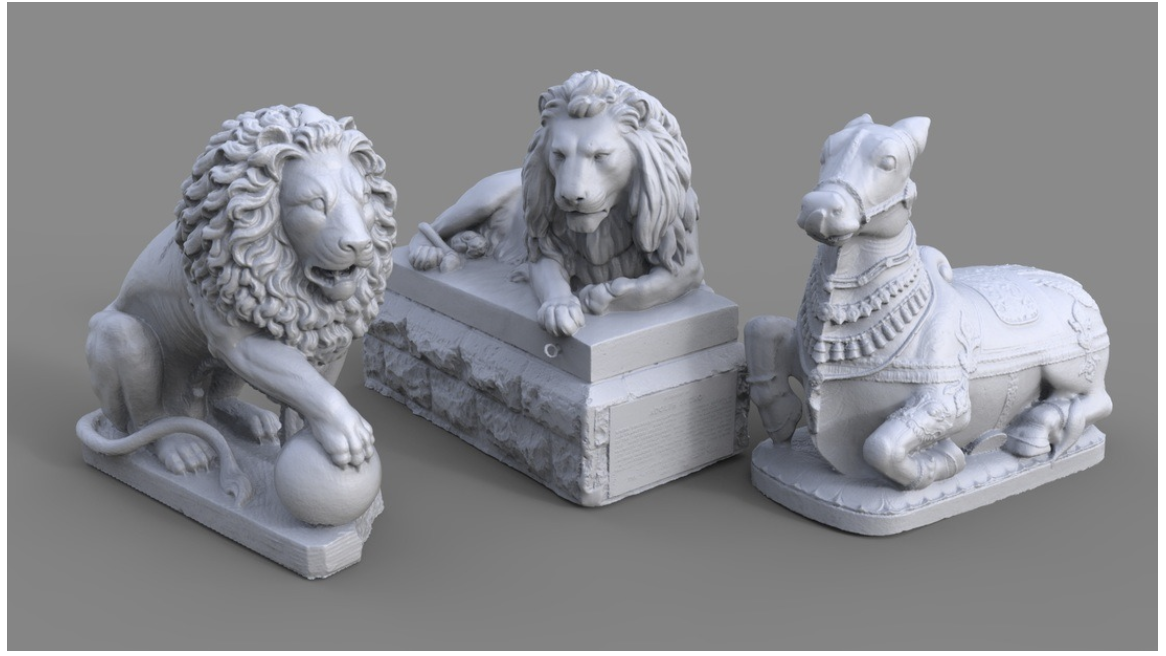
Figure 8. Photogrammetry can generate highly detailed 3D models from photographic image sets.
For many newcomers, the challenge is not whether photogrammetry can scan small objects, but how to do so affordably and accurately.
Professional photogrammetry setups for small-object scanning often require specialized cameras, lenses, lighting systems, and turntables, which can quickly become costly. So what is the most cost-effective way to create accurate 3D scans without investing in professional-grade equipment?
The second part of this article will explore a budget-friendly photogrammetry setup and demonstrate how precise 3D scans can be created without the need for expensive hardware.
You may also like:


Filed Under: Tech Articles
Log in to leave a comment:
Lost your password?
Don't have an account? Register here