
Engineers Garage

  • Electronic Projects & Tutorials
    • Electronic Projects
      • Arduino Projects
      • AVR
      • Raspberry pi
      • ESP8266
      • BeagleBone
      • 8051 Microcontroller
      • ARM
      • PIC Microcontroller
      • STM32
    • Tutorials
      • Sensor Series
      • 3D Printing
      • AI
      • ARDUINO Compatible Coding
      • Audio Electronics
      • Battery Management
      • Beginners Electronics Series
      • Brainwave
      • Digital electronics (DE)
      • Electric Vehicles
      • EMI/EMC/RFI
      • EVs
      • Hardware Filters
      • IoT tutorials
      • LoRa/LoRaWAN
      • Power Tutorials
      • Protocol
      • Python
      • RPI Python Programming
      • Sensors
      • USB
      • Thermal management
      • Verilog
      • VHDL
    • Circuit Design
    • Project Videos
    • Components
  • Articles
    • Tech Articles
    • Insight
    • Invention Stories
    • How to
    • What Is
  • News
    • Electronic Product News
    • Business News
    • Company/Start-up News
    • DIY Reviews
    • Guest Post
  • Forums
    • EDABoard.com
    • Electro-Tech-Online
    • EG Forum Archive
  • DigiKey Store
    • Cables, Wires
    • Connectors, Interconnect
    • Discrete
    • Electromechanical
    • Embedded Computers
    • Enclosures, Hardware, Office
    • Integrated Circuits (ICs)
    • Isolators
    • LED/Optoelectronics
    • Passive
    • Power, Circuit Protection
    • Programmers
    • RF, Wireless
    • Semiconductors
    • Sensors, Transducers
    • Test Products
    • Tools
  • Learn
    • eBooks/Tech Tips
    • Design Guides
    • Learning Center
    • Tech Toolboxes
    • Webinars & Digital Events
  • Resources
    • Digital Issues
    • EE Training Days
    • LEAP Awards
    • Podcasts
    • Webinars / Digital Events
    • White Papers
    • Engineering Diversity & Inclusion
  • Guest Post Guidelines
  • Advertise
  • Subscribe

Invention Story of Ball Point Pen

By Samidha Verma January 12, 2011

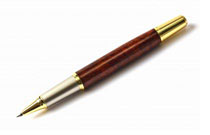
 Image Of Commercially Used Ball Point Pen

Fig. 1: Image Of commercially used Ball Point pen

Every invention has a story which sizzles right behind the scenes. Ball Pen is also one invention, which though is of huge importance, yet not many know where it originated from. The history of the pen can be traced back to 1880s, when the first patent on a ball pen was issued to John Loud. This leather tanner attempted to make a writing object with which he could write on the leather he tanned. The pen, he had invented, constituted of a rotating steel ball as the tip held in a socket. It could write on the leather as intended by Loud. However, the invention proved futile for others as it proved way too coarse and messy for letter writing; so was disapproved commercially. The original patent lapsed with the failure of this invention on the grounds of practicality and usability.
 
The second innings for the ball pen was in the making and it all began again with the first and very famous stylized fountain pen. Invented by Cross, the fountain pen is identified as daddy to the ball pens. This invention triggered more of brainstorming that lasted till ball pen was born. Laszlo Jozsef Biro, a native of Budapest owns the patent of the ball pen to his name. What he had invented was a ball pen that contained ink cartridge in the pressurized form. A journalist named Biro took no time in noticing the quick drying capability of the ink used in the newspapers, and thought that if the same ink was utilized in a pen that smudged letters problem could be resolved. Being a proof reader, Biro had to refill his fountain pen from an ink bottle incessantly and this drove him crazy at times.
In the beginning of 1930s, along with his brother Georg, a chemist, Biro began with the experiment of a pen that would not need to be refilled and at the same time would not smudge the pages too. The concept revolved around a ball which was used on the tip of the pen and as this pen was moved on the paper, the ball would rotate pulling the ink from the cartridge. This time, the design of the pen was acclimatized with practicality and hence, the two brothers used a sealed reservoir which would store the ink inside the pen. In terms of consistency too, the ink was changed to thicker and quick drying ink. As the designing flaws were bid goodbye, Laszlo Biro was issued a patent to the pen in the year 1938. It could well be summed up, that even though Laszlo was not the first inventor of a ball pen; he was however, the successful inventor of a working design of ball pen which is now universally acceptable.
 
The story doesn’t end here; in the year 1943, the two brothers began their quest for getting their invention worldwide recognition as well as financial support. They moved to Argentina and discovered someone who willingly financed the Birome pen and in no time, a factory was started to manufacture more ball pens. The ball pen was initially advertised as the only pen which could write even under the water. There were demonstrations witnessed by huge audiences, plenty of those who longed to write with the ball pen under the water. The company led by Biro became the leading producers of ball pens. The British soon caught wind of it and fascinated by the qualities of the ball pen, they bought the patent. The company was thus, sold to BIC Corporation who started producing and supplying pens to the Royal Air Force. Biro pens were considered highly useful for the pilots as they could write even in the pressure of high altitudes. This was also a major breakthrough for the ball pen that faced huge rivalry from the fountain pen as initially it was marked as a useful and fashionable accessory, but then being used at high altitudes added to the technological specification of the pen.
 
At a much reduced price, the ball pen made a foray into the British market. Laszlo Biro, the inventor continued his display of entrepreneurial flair and managed to secure significant financial scores to his name, however, he soon lost the Biro Company to Henry Martin who took over the production of ball pen from Laszlo Biro. Martin made the ball pen an established name (Biro Swan) in the market, but the credentials to bring ball pen to the position that it enjoys today, go to Marcel Bich. He founded a company that manufactured his own patented ball pen designs. BIC Cristal, that directly succeeded Biro, enjoys the largest share in the market today. Pen had discovered a market for itself a lot earlier, but the quality practices which underwent in making the ball pen as perfect as it is today are owed to Bich who established the ball pen high on the international benchmarks. Ever since then, the ball pen has been evolving and a lot has been added to the history of pens.
 
Today, ball pens are manufactured in almost every country. What goes in their making is also a well defined geographical needs criterion to ensure that the ink viscosity and tip tolerances are as per the environment, where the pens are meant to be used. The present scenario is such that the market is flooded with pens in unlimited varieties, designs and colors. It is a “choose as you may” situation for the users. Ranging from handcrafted ball pens to simple and sober ones, you will find them all in a variety unimaginable. Ever wondered, such a small item has given the world so much. A small invention has now become an indispensable part of our lives. It might not be the most technologically high-end instrument, but probably one of the most essential ones, one we can’t do without. How many times have you complained your pen got stolen? That is just because a lot of us need them in our everyday lives. Whether to a student or a business man, pen is highly useful tool.


Filed Under: Invention Stories

Tagged With: ball point pen, invention, pen
 

Next Article

← Previous Article
Next Article →

Questions related to this article?
👉Ask and discuss on EDAboard.com and Electro-Tech-Online.com forums.


Tell Us What You Think!! Cancel reply

You must be logged in to post a comment.

Submit a Guest Post

submit a guest post

EE TECH TOOLBOX

“ee
Tech Toolbox: Power Efficiency
Discover proven strategies for power conversion, wide bandgap devices, and motor control — balancing performance, cost, and sustainability across industrial, automotive, and IoT systems.

EE Learning Center

EE Learning Center
“engineers
EXPAND YOUR KNOWLEDGE AND STAY CONNECTED
Get the latest info on technologies, tools and strategies for EE professionals.

HAVE A QUESTION?

Have a technical question about an article or other engineering questions? Check out our engineering forums EDABoard.com and Electro-Tech-Online.com where you can get those questions asked and answered by your peers!


RSS EDABOARD.com Discussions.

  • MC145151/2 p2 calculation dip swich vs xtal divader
  • Looking for Detector Switches similar to PANASONIC ESE24CMH with a 12V rating
  • Crude Powerline FSK comms literally shorts the power bus at a certain frequency?
  • Direction and Orientation of Current in Transformer
  • Is a Digitizer Necessary for INL and DNL Measurement in DACs?

RSS Electro-Tech-Online.com Discussions

  • need help in photodetection TIA circuit
  • Need to solder a really delicate ribbon for an electric reel need advice
  • Need Help Troubleshooting a PCB Assembly Issue
  • Solar tracker simulation
  • Help please! BLDC driver circuit using the IR2136s and the STP80NF06 MOSFETS

Featured Tutorials

Real Time Hardware Filter Design

  • Practical implementation of bandpass and band reject filters
    Practical implementation of bandpass and band reject filters
  • Practical application of hardware filters with real-life examples
    Practical application of hardware filters with real-life examples
  • A filter design example
    A filter design example
  • Types of filter responses
    Types of filter responses
  • What are the two types of hardware filters?
    What are the two types of hardware filters?
  • What are hardware filters and their types?
    What are hardware filters and their types?
More Tutorials >

Recent Articles

  • Microchip extends single pair Ethernet lineup with software-less endpoint
  • Infineon MCU targets high-voltage BMS in electric vehicles
  • SemiQ releases expanded SiC MOSFET lineup with detailed thermal and switching data
  • TDK adds 1000 W models to dc-dc converter series
  • LEMO introduces resin-free IP68 connectors for compact equipment

EE ENGINEERING TRAINING DAYS

engineering
Engineers Garage
  • Analog IC TIps
  • Connector Tips
  • Battery Power Tips
  • EDABoard Forums
  • EE World Online
  • Electro-Tech-Online Forums
  • EV Engineering
  • Microcontroller Tips
  • Power Electronic Tips
  • Sensor Tips
  • Test and Measurement Tips
  • 5G Technology World
  • Subscribe to our newsletter
  • About Us
  • Contact Us
  • Advertise

Copyright © 2025 WTWH Media LLC. All Rights Reserved. The material on this site may not be reproduced, distributed, transmitted, cached or otherwise used, except with the prior written permission of WTWH Media
Privacy Policy

Search Engineers Garage

  • Electronic Projects & Tutorials
    • Electronic Projects
      • Arduino Projects
      • AVR
      • Raspberry pi
      • ESP8266
      • BeagleBone
      • 8051 Microcontroller
      • ARM
      • PIC Microcontroller
      • STM32
    • Tutorials
      • Sensor Series
      • 3D Printing
      • AI
      • ARDUINO Compatible Coding
      • Audio Electronics
      • Battery Management
      • Beginners Electronics Series
      • Brainwave
      • Digital electronics (DE)
      • Electric Vehicles
      • EMI/EMC/RFI
      • EVs
      • Hardware Filters
      • IoT tutorials
      • LoRa/LoRaWAN
      • Power Tutorials
      • Protocol
      • Python
      • RPI Python Programming
      • Sensors
      • USB
      • Thermal management
      • Verilog
      • VHDL
    • Circuit Design
    • Project Videos
    • Components
  • Articles
    • Tech Articles
    • Insight
    • Invention Stories
    • How to
    • What Is
  • News
    • Electronic Product News
    • Business News
    • Company/Start-up News
    • DIY Reviews
    • Guest Post
  • Forums
    • EDABoard.com
    • Electro-Tech-Online
    • EG Forum Archive
  • DigiKey Store
    • Cables, Wires
    • Connectors, Interconnect
    • Discrete
    • Electromechanical
    • Embedded Computers
    • Enclosures, Hardware, Office
    • Integrated Circuits (ICs)
    • Isolators
    • LED/Optoelectronics
    • Passive
    • Power, Circuit Protection
    • Programmers
    • RF, Wireless
    • Semiconductors
    • Sensors, Transducers
    • Test Products
    • Tools
  • Learn
    • eBooks/Tech Tips
    • Design Guides
    • Learning Center
    • Tech Toolboxes
    • Webinars & Digital Events
  • Resources
    • Digital Issues
    • EE Training Days
    • LEAP Awards
    • Podcasts
    • Webinars / Digital Events
    • White Papers
    • Engineering Diversity & Inclusion
  • Guest Post Guidelines
  • Advertise
  • Subscribe