
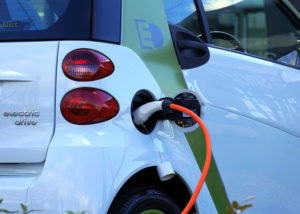
 Electric vehicles (EVs) have many benefits over internal combustion engine vehicles, including superior performance, a high energy density, less pollution, excellent acceleration, and more. But EVs are not perfect. One major drawback is the need for a costly battery system with specific maintenance requirements, including a long charge time.
One of the key components of EVs is the battery management system (BMS). To meet increased power and voltage requirements, EVs use battery packs with hundreds of battery cells connected in a series or parallel arrangement — this forms a complex battery system.
Any less than ideal battery conditions — such as over-current, over-voltage, over-charging, or over-discharging — leads to damage and aging. In the worst-case scenarios, there’s the risk of fire and explosion. For these reasons, a BMS is needed to provide a “safety catch” to ensure proper battery performance.
However, the BMS features (such as current and voltage protection during the charging and discharging processes) are reliant on the battery operation conditions (the load, life, temperature, etc.). This is partially done through battery modeling, which offers a mathematical model of a virtual cell that verifies the BMS will work appropriately for the corresponding battery pack.
Battery modeling includes the battery:
- State monitoring
- Design of the real-time controller
- Fault analysis
- Thermal management
- Overall behavior interpretation
Monitoring
Battery state monitoring is necessary to optimize a battery’s safety and performance, as well as its lifetime forecasts and aging diagnostics. Fading batteries accrue a robust electrolyte interface at the negative electrode. Cell design, battery performance, and environmental circumstances are among the many factors affecting a battery’s lifespan.
State-of-charge (SoC) battery evaluation provides information about the battery’s remaining capacity as a percentage amount of its total capacity. SoC estimation has two generally used approaches: direct estimation and model-based evaluation.
Direct estimation is based on the primary measurement of electrical battery parameters (voltage and current). The two computation methods used are Ampere-hour (Ah) and open-circuit voltage (OCV)- based systems. However, planning the initial SoC and measurement accuracy can be a challenging process when adjusting the Ah method for the SOC estimation algorithm.
This approach is highly reliant on the measured current, where errors accumulated over time significantly influences the accuracy of the SoC estimation. It’s also challenging to determine the accurate initial SoC in real-world purposes (e.g., in the case where a battery is charged only within an insufficient range, say from 10 to 90 percent).
On the other hand, the OCV-based method produces high estimation accuracy and has been accepted as an efficient and popular method for SoC calculation. There’s a non-linear relationship between a battery’s SoC and OCV. The procedure requires sufficient battery resting (the battery requires to be disconnected from chargers and loads). The main weakness of this method is the quiet time. It usually takes a long time to reach stability after disconnecting the battery from its charge (it can take more than two hours under low-temperature circumstances).
The OCV-SoC relationship also depends on the battery’s lifetime and temperature.
Temperature
Battery temperature is an imperative factor that affects battery performance, lifespan, performance, and safety. Thermal sensors are suitable for measuring a battery’s exterior temperature.
However, this information alone is not adequate because the internal temperature of the battery is a critical parameter for proper battery management. High internal temperature stimulates the battery’s aging and causes safety concerns (e.g., fire). The internal battery temperature is usually significantly altered than the surface temperature (up to 12° C in high-powered applications).
Producing a proper approach for internal battery temperature evaluation prevents accelerated aging of batteries and supports the BMS algorithm in optimizing battery energy discharging.
Classifications
In general, battery models can be classified into three main types:
1. Electric
2. Thermal
3. Coupled models (other models, such as kinetic models, are rarely used in BMS design).
The battery-electric model involves the electrochemical model, reduced-order model, commensurate circuit model, and the data-driven model. The electrochemical model presents information about battery electrochemical behaviors. This model can be extremely precise but requires an advanced simulation and computation effort. As a result, it’s challenging to fully employ this model in a real-time application.
Consequently, the reduced-order electric model is produced as a simplified physics-based electrochemical model to determine the Li-ion battery state of charge (SoC). Uncomplicated reduced-order electric models provide less insight, but are convenient for real-time battery applications.
The key is to monitor battery temperature as a part of a successful BMS. A battery’s performance can deteriorate if operated in higher or lower temperatures. Separate cooling systems are typically used to maintain proper battery temperature. For instance, Tesla uses a patented battery pack configuration with a plate-based cooling system to dissipate the heat and monitor battery temperature.
The battery coupled electro-thermal model apprehends the battery’s electric (current, voltage, SoC) and thermal (surface and internal temperature) operations — simultaneously. Several coupled electro-thermal models have now been developed.
For example, a 3D electro-thermal model measures battery SoC and calculates heat generation and distribution under both continuous and dynamic currents. This model contains a 2D potential delivery model and a 3D temperature distribution model. Batteries have validated a reduced low-temperature electro-thermal model with three cathode materials. This model is ideal for developing fast heating, and optimal charging requests under low-temperature conditions.
You may also like:



Filed Under: Applications, Automotive, Battery Management, Blog entry, Electric Vehicles, Tech Articles, Tutorials

Questions related to this article?
👉Ask and discuss on EDAboard.com and Electro-Tech-Online.com forums.
Tell Us What You Think!!
You must be logged in to post a comment.