
Artificial Intelligence is a multi-disciplinary field that deals with making computers/machines intelligent like humans. Theoretically, it aims at simulating human cognitive functions and excelling them even better than humans. This theoretical concept of artificial intelligence is known as “Artificial General Intelligence”. AI, from the view of its concept, is still in its infancy. Despite that, AI has already become prevalent in almost every industry to-date.
A contributing factor for the growth and importance of AI in the past decade is the result of big data. Search engines, social media, e-commerce, the internet of things, and online business analytics have highlighted the very importance of data. The internet has made the data from everywhere and anywhere available in real-time, and organizations need quick insights from that enormous amount of data. Humans cannot practically handle such data-heavy and redundant tasks, while computers lack human-like cognitive functions to process the data independently. The only alternative is to infuse human-like intelligence in the computers that they learn from the data instead of relying on explicit programming.
AI is evolving and already applicable in the form of machine learning and deep learning. Machine learning focuses on learning from historical data by identifying data patterns and correlations between data and outcomes. Deep learning focuses on extracting representational concepts from data itself. Machine learning and deep learning are the core of current artificial intelligence.
The evolution and application of artificial intelligence can be better understood by its classification. The classification of artificial intelligence based on its capabilities features how AI is evolving. Based on capabilities, there are three types of artificial intelligence.
- Narrow AI (Weak AI)
- General AI (Strong AI)
- Super AI
The classification of AI is based on functionalities highlights its technical applicability. This classification was given by Arend Hintze, an assistant professor of integrated biology and computer science at Michigan State University, in a 2016 article. Based on functionalities, there are four types of artificial intelligence.
- Reactive machines
- Limited memory
- Theory of mind
- Self-awareness
Let us understand the different types of artificial intelligence.
Narrow AI/Weak AI
Narrow AI, also known as “weak AI,” is the most widely used and most successful form of artificial intelligence. Narrow AI simulates human intelligence to perform a single specific task within a limited context. It is capable of implementing a single subset of cognitive abilities to excel in only one particular function. The same subset cannot be applied to another task, i.e., narrow AI only operates in a limited predefined range and cannot be generalized to perform other tasks. Some examples of Narrow AI are virtual personal assistants (like Siri, Alexa, etc.), Image recognition programs, self-driving cars, IBM’s Watson, Google’s page ranking algorithm, Google translate, recommendation engines, chatbots, spam filtering, etc. For example, face recognition software can recognize a familiar face, but it cannot respond to a voice command. A virtual personal assistant can respond to a voice command, but it cannot perform anything else. Much of the weak AI is the implementation of machine learning or deep learning.
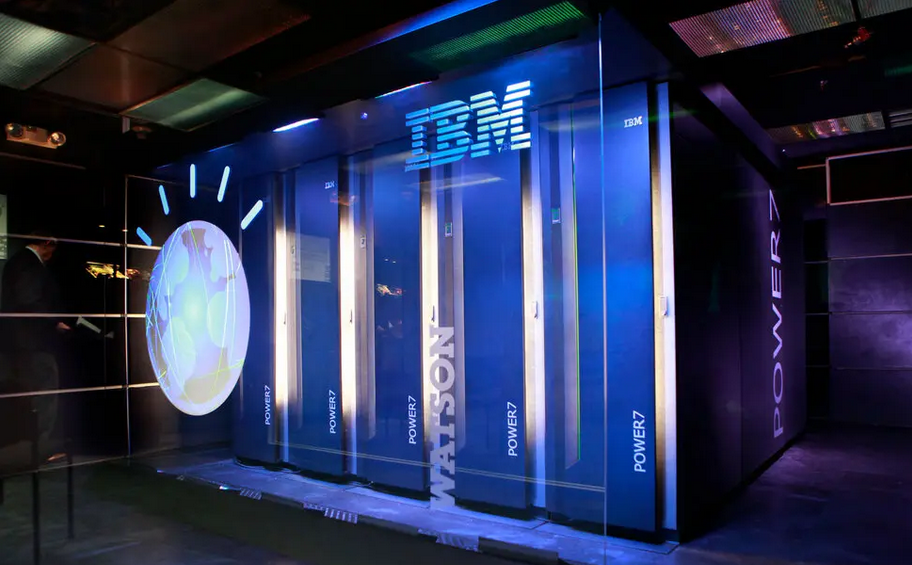
Image of IBM Watson
General AI/Strong AI
General AI, also known as Strong AI or Artificial General Intelligence, is a term for implementing a full set of cognitive abilities that is not limited by any context. It aims at making machines capable of applying human-level intelligence to any task. It focuses on deriving a universal algorithm for learning and acting in any environment. The researchers have not been able to achieve strong AI yet. In theory, a strong AI program must pass the Turing Test and the Chinese room test. Many different artificial intelligence technologies are under development to achieve AGI. This includes computer vision, natural language processing, fuzzy logic, robotics, machine learning, deep learning, etc. A human brain is estimated to do one billion calculations per second, and even the fastest supercomputer takes 40 minutes to perform the same number of calculations. Therefore, Strong AI doesn’t seem to be possible soon.
Super AI
Super AI refers to artificial intelligence that may be superior to human-level intelligence. It envisions machines capable of learning, reasoning, and problem-solving even better than humans.
Let us now discuss different types of artificial intelligence based on functionalities.
Reactive machines
A reactive machine is a primary form of artificial intelligence. It does not have any memory to store past experiences. Therefore, it solely operates on real-time data. It receives data and reacts to it to perform a specific task. This type of artificial intelligence is limited in its capabilities, and the algorithm is tailored to perform a particular task. The same algorithm cannot be applied to any other or even similar task. A popular example of reactive machines is IBM’s Deep Blue. Deep Blue is a chess-playing supercomputer. It is a reactive machine lacking any memory. It looks at the current chess board pieces and applies its algorithm to determine the next possible moves and its opponent. As it does not use any memory, it cannot learn from its past experiences or improve over time with practice. All it does is react to the current game and determine the most optimal moves. Deep Blue is known for defeating chess grandmaster Garry Kasparov in the 1990s.
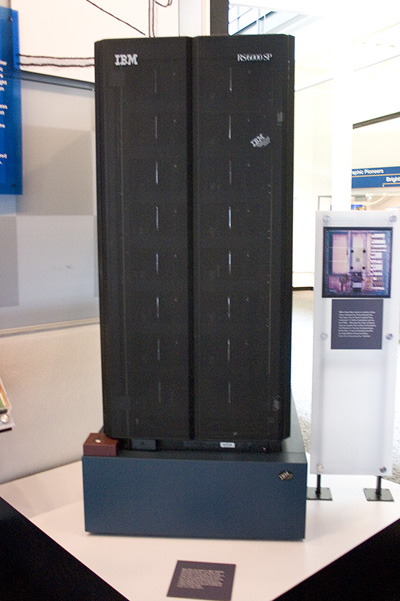
Image of IBM Deep Blue
Another famous example of reactive machines is Google’s Alpha Go. It is a more sophisticated AI as it uses neural networks for the evaluation of the game. Alpha Go is known for beating up top human Go experts despite being a purely reactive machine and cannot train itself in any form.
Reactive machines have no representation of their environment, and they are designed to operate in specific situations to perform particular tasks simply. Many researchers argue that AI should progress towards reactive machines only, and they should not have a given representation of the world and must interact directly with their environment. However, without a proper representation of the environment, it is not practically possible to achieve any artificial general intelligence.
Limited memory
This form of artificial intelligence has a short-lived memory. It can learn from its immediate past experiences to excel in a specific task but cannot build detailed libraries of its experiences. These machines have a static memory to store a particular representation of the world that applies to their task. They also have a dynamic memory where they store only immediate past experiences or short-term memories. By perceiving a representation of the surrounding world from static memory and applying correlations with the help of short-term memories, they excel in a specific task.
A popular example of limited memory AI is self-driving cars. The cars have a static memory to identify traffic signals, traffic lights, and lane markers. They have a dynamic memory in which they store the speed and directions of the surrounding cars. By using rules and knowledge from static memory and perceiving their present environment in the form of short-term memories, they try self-drive along with other vehicles and human drivers. However, their memory of the perception of speed and directions of other cars is short-lived, only enough to complete their current journey. They cannot learn or excel driving from their experiences of self-driving over time.
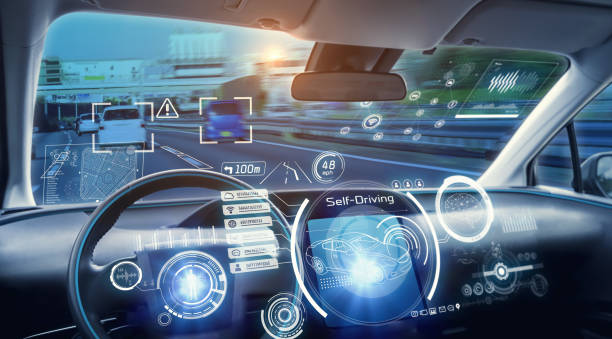
Self-driving cars
Limited memory AI is widely used for machine learning. Most of the current machine learning applications are based on limited memory AI. Three types of machine learning models use limited memory – Reinforcement Learning, Long Short Term Memory (LSTM), and Evolutionary Generative Adversarial Networks (E-GAN). Reinforcement Learning uses short-term memories to improve predictions and excel in a task through repeated trials and errors. LSTM is the most trending machine learning model. It utilizes the recent historical data with limited emphasis on older data. It tries to identify outcomes from the latest data patterns or make predictions based on its short-term memories. E-GAN is an evolutionary model, where the machine constantly learns and improves its performance from its recent memories and outcomes. The new outcomes are built from the predictions made over past outcomes. In course, the model evolves with a continuous learning process.
Theory of mind
All the current AI systems are either reactive or limited memory devices, and they all fall into narrow AI. Theory of mind envisions machines to represent the world, where they have their thoughts, feelings, and decisions. This is what is to be achieved in the future. Some real-life efforts in this direction are the robots like Kismet and Sophia. Sophia is a robot equipped with advanced computer vision capability that can recognize individuals, socialize and follow faces. Kismet is a robotic head that is designed to recognize and mimic human emotions.
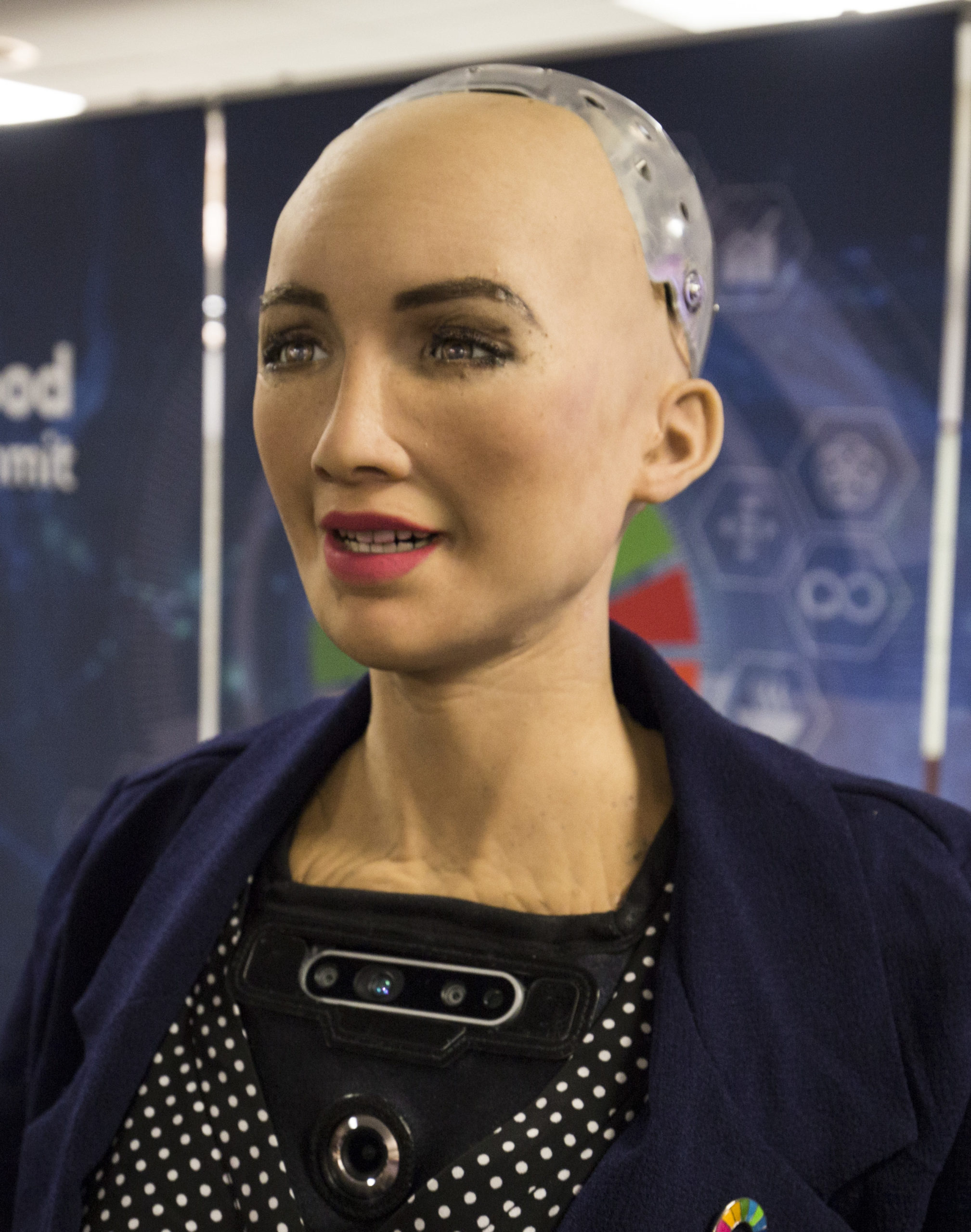
AI-Sophia
Self-Awareness
This is the highest goal of artificial intelligence, which is to make machines have a proper representation of the world on their own and have an awareness of themselves. It envisions machines to be aware of their traits, conditions, and internal states with their feelings, faith, and beliefs. A self-aware machine would not need to borrow consciousness from a model. Instead, have its consciousness. It will know what it wants and what it has to do. Such a machine will be a living creature in itself.
The human mind itself is a complex puzzle, and creating a copy of the human mind or anything better is all unknown.
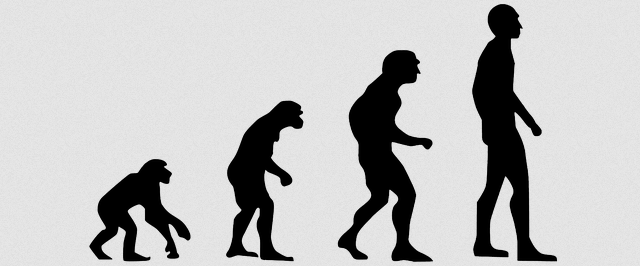
Self-Awareness AI
Conclusion
All the current artificial intelligence applications fall under narrow AI and have functionalities of either reactive nature or limited memory. These applications with no representation of the world or a limited and specific representation are so valuable and reliable that they can best perform in data-heavy and detail-oriented tasks that normal humans cannot. Even these primitive and limited forms of artificial intelligence have proved their worth in a new world where data is the new oil.
The field of artificial intelligence envisions machines to have far superior consciousness where they have their representation of the world and may have a representation of their own all on their own. Though researchers are concentrating their efforts on computer vision, natural language processing, robotics, sensor technology, artificial emotional intelligence, etc., creating a living creature from metal is still a faraway dream.
You may also like:






Filed Under: Applications, Featured, Machine Learning, What Is

Questions related to this article?
👉Ask and discuss on EDAboard.com and Electro-Tech-Online.com forums.
Tell Us What You Think!!
You must be logged in to post a comment.