Introduction to Amplifiers
The amplifiers are devices which produces an output signal which is several times higher in amplitude than the input signals. The ratio of the amplitude of the output signal from an amplifier circuit to the amplitude of the input signal is called Gain. The amplifier circuits are normally designed for a fixed amount of gain. There are amplifiers with very low gain, like the amplifiers at the loudspeaker side of an audio device and also there are amplifiers with very high gain, like the amplifiers in the radio receivers or amplifiers at the microphone side of an audio device.
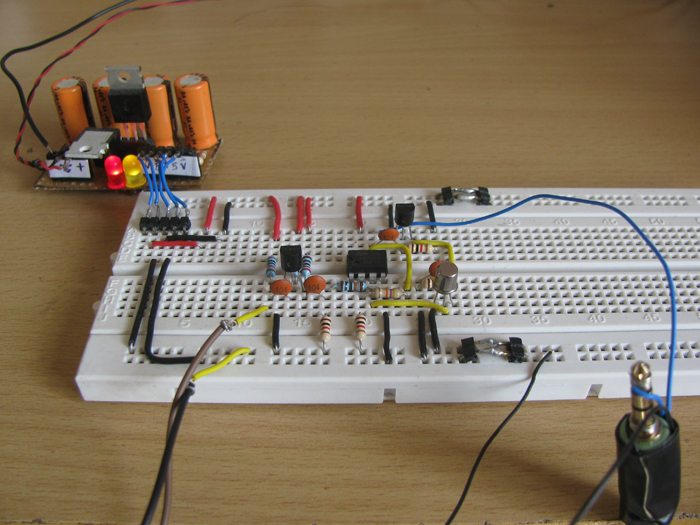
Fig. 1: Automatic Gain Control Circuit on Breadboard
The Automatic Gain Control (AGC) amplifiers are another category of amplifiers which can vary its gain according to the input signal level. They provide enough amplification for the weak signals and prevent strong signals from getting over amplified. They were basically designed for the radio receiver circuit which receives highly varying signal strength according to the climatic conditions. They apply very high gain whenever the signals are week and as the signal strength decreases, they automatically decrease their gain. They are also used in most of the audio amplifier circuits, audio ICs, signal analyzers etc. They are commonly found with microphone circuit for recording the voice at optimum signal level.
This project demonstrates the working of a very high gain audio AGC amplifier which is used for amplifying the microphone signals.The signals are reproduces on a headset using which most of the sound in the environment can be heard. Music is played on a mobile phone which is placed near to the microphone and away from it and it can be observed that the loudness of the sound reproduced on the headset is constant over a reasonable range from the microphone.
DESCRIPTION:
This circuit is uses a two stage amplification of the signals, first with a simple transistor amplifier and then with an op-amp based AGC amplifier. A condenser microphone is used at the input and a normal headset with volume controller feature is used at the output. The entire system can be represented using the following block diagram:
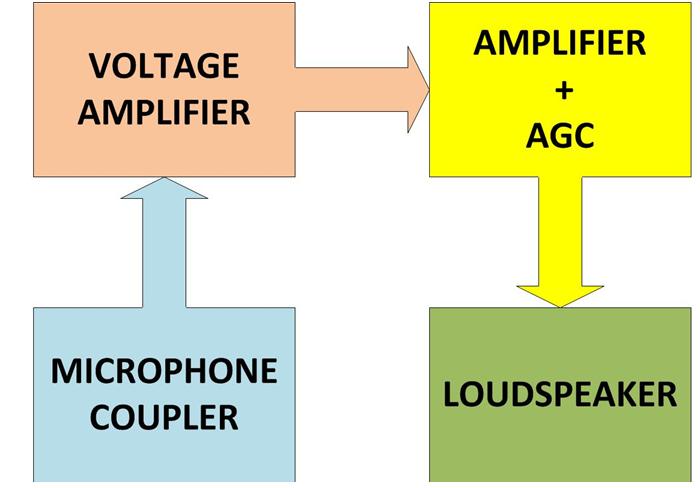
Fig. 2: Block Diagram of Automatic Gain Control Circuit (AGC)
1) MICROPHONE COUPLER
The microphone coupler is a circuit which helps to couple out the weak audio signals generated at the microphone. There are different kinds of microphones which have different working principle, but all of them have a diaphragm which vibrates according to the sound signals. As the diaphragm vibrates the current flowing through the microphone varies according to the sound signals amplitude which made the diaphragm to vibrate. Here in this circuit a condenser microphone is used which and the varying current is made to flow through a resistor across which the equivalent voltage get generated due to the current flow. This voltage across the resistor will be having a DC voltage on to which the varying voltage gets added up. This varying voltage is separated out from the DC voltage with the help of a coupling capacitor and fed to the following amplifier circuits.
With a condenser microphone a 10K resistor and a 0.1uF coupling capacitor is used in most of the circuits.
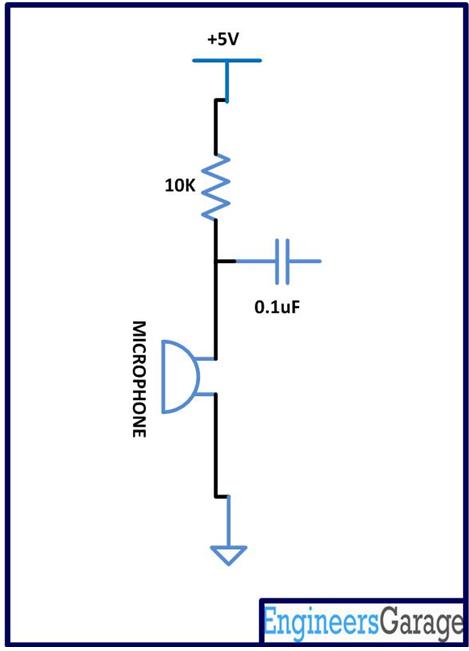
Fig. 3: Circuit Diagram of Microphone Coupler
2) VOLTAGE AMPLIFIER
This is an amplifier with a fixed gain and it is used to pre-amplify the audio signals from the microphone to the required level for the AGC amplifier circuit. The signals produced on the microphone especially from the distant sound sources will be very feeble and needs to be amplified several times before they can be applied to any other circuits.
Here a single transistor based amplifier circuit is used to amplify the audio signals coupled out from the microphone. This circuit is designed to have extremely high gain so that the audio signals are get amplified enough. The transistor is connected in a common emitter configuration and fixed bias technique is used for biasing the transistor.
As the value of the Rc increases the gain of the circuit increases and it should be taken care of that when there is no input signals present the amplifier must be in its quiescent state, means in case of a transistor based circuit the output voltage without any input signal should be exactly the half of the total supply voltage.
Here a 2.2K ohm resistor is selected, which will allow to flow more than one mille ampere current through the transistor and the resistor itself in series with it, creating around 2.8 volts across Vce.
Vce = 5 – (2200 * 1mA) = 2.8 V; (almost quiescent voltage)
Since the expected output current Ic is fixed at 1mA, the input current at quiescent state that will produce that output current can be calculated with the help of the relation of the hfe of a transistor with the input and the output currents. The hfe is generally called the current gain and is given by the equation
hfe = Ic / Ib; where Ic is the output collector current and the Ib is the input base current
The hfe of the transistor BC548 has a maximum value of 300, and applying the values of Ic and hfe on to the above equation the Ib can be calculated around 4uA.
The voltage Vb across base resistor Rb will be the supply voltage minus 0.7 volts for a silicon transistor at quiescent state. Here since the supply voltage is 5V, the Vb can be calculated as 4.3 V. Now since the voltage Vb across the resistor and the current Ib flowing through the resistor is known, the required value of the resistor can be calculated using the ohms law;
Rb = 4.3 V / 4.3 uA = 1M
A 0.1uF capacitor is commonly used to couple the audio signals in between the amplifier stages.
Amplifier and AGC Circuits
3) AMPLIFIER + AGC
This circuit uses a normal op-amp based negative feedback amplifier with an extra feedback network on its positive input pin. Normally the gain of a negative feedback amplifier is fixed by the feedback resistance on its negative input pin, but since this circuit has a feedback network connected to the positive input pin, the gain depends on that circuit also. The feedback network on the positive pin includes mainly a FET which acts like a voltage varying resistor, a transistor to drive that FET and a RC filter circuit that generates the varying gate voltage for the FET according to the varying signal strength at the output of the op-amp.
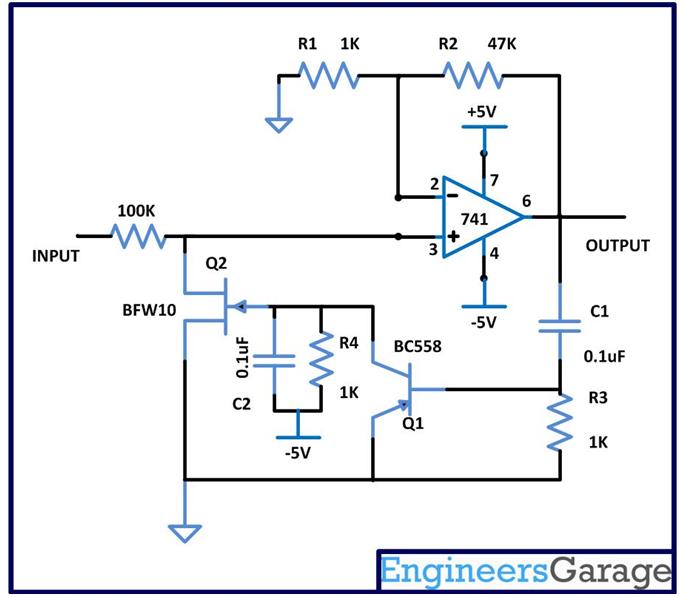
Fig. 4: Circuit Diagram of Automatic Gain Control with Amplifier
The capacitor C1 couples the audio signals from the output of the op-amp to the base of the PNP transistor. The converts the AC signal coupled from the op-amp output to a DC equivalent voltage with the help of the C2 and R4. The operation of the Q1 and the C2 and R4 are very much similar to a single diode rectifier where the Q1 acts as a rectifier and the C2 and R4 acts like a RC filter smoothing out the ripples at the output of the rectifier diode and creating a DC voltage. Here the value of this DC voltage depends on the amplitude of the signal at the output of the op-amp. If the op-amp output is low, the DC voltage will be low and if the op-amp output is high then the DC voltage will also be high.
This voltage applied to the gate of the FET to control the trans-conductance it, which acts as a voltage varying resistor in this circuit. If the voltage at the gate of the FET decreases it conducts less from ground to the positive input pin of the op-amp which increases the gain of the op-amp. When the voltage at the gate of the FET increases it conducts more and hence reduces the gain. Hence this mechanism controls the gain of the op-amp according to the amplitude of the signal at the output of the op-amp, which happens according to the amplitude of the input signal to the op-amp.
At very small amplitude signals the gate voltage of the FET will be very small and it will not conduct from ground to the positive pin of the op-amp. In such a case the feedback network on the positive pin can be completely ignored and the entire circuit behaves as a simple negative feedback op-amp amplifier. The gain will be at the maximum at that time and can be found out using the following equation:
G = – ( R2 / R1 ) dB
This particular circuit provides a maximum gain of around 50 dB and holds the amplitude of the output signal constant at 2.5 V p-p from input signal amplitude of 50mV p-p.
Circuit Diagram
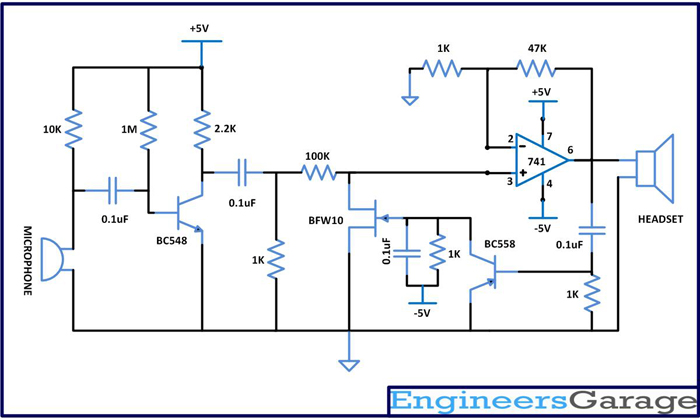
Fig. 5: Circuit Diagram of Automatic Gain Control with Microphone and headset connections
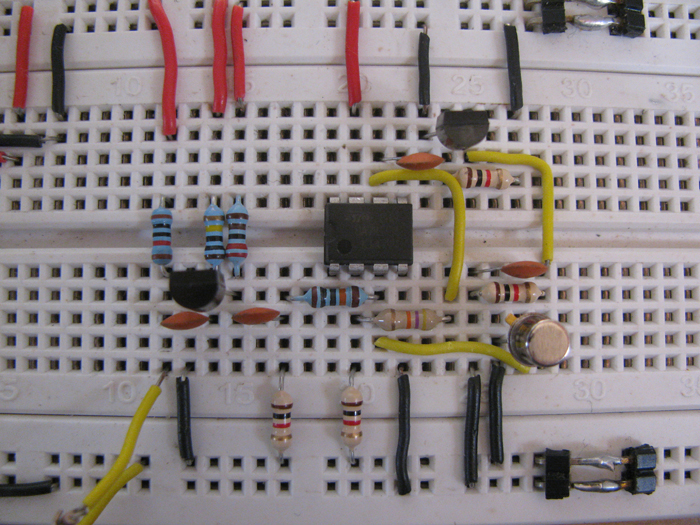
Fig. 6: Image Explains About Automatic Gain Circuit Wired on BreadBoard
Circuit Demonstration Video
Filed Under: Circuit Design, Featured Contributions
Log in to leave a comment:
Lost your password?
Don't have an account? Register here