The August 2026 edition of “Flea at MIT” was not only the largest I’ve ever seen, but it had the most test equipment too.
Cambridge, MA — On the third Sunday of the month from April through October, buyers and sellers gather in a garage on the MIT campus for the Flea at MIT. I attend once a year and usually report on the computers, electronics, test equipment, tools, magazines, and musical instruments for sale. The swapfest usually consumes two levels of the garage, but this time, it extended to a third level.
You never know what will appear at a swapfest. Sometimes, there’s hardly any test equipment at all. Not this time. There was so much test equipment here that I’ll mostly limit coverage to that genre, with an exception or two. This time, there’s enough test equipment to categorize it:
- Oscilloscopes, logic analyzers, and spectrum analyzers.
- Meters, digital and analog (including what I bought).
- Signal sources, RF and function generators.
- Power supplies.
- Tube testers and tubes to test.
- Odds and ends.
Some of my photos don’t fit cleanly into these categories, mostly because of stacks containing, for example, meters and signal generators.
Here’s the line in front of me just before the swapfest opened:
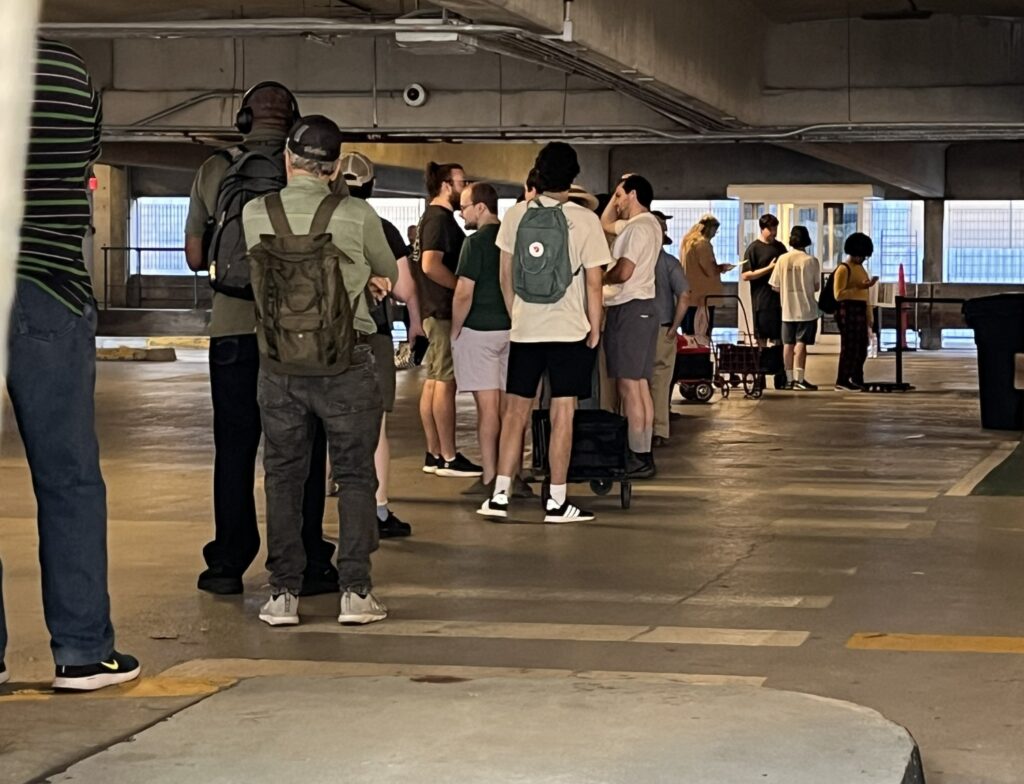
The line behind me was twice as long. A few people were already leaving, having paid extra to get in early. They were walking out with wagons of purchased items in tow.
Oscilloscopes, logic analyzers, and spectrum analyzers
We start with test equipment containing graphical screens, both analog and digital. After all, you can’t expect a 1950s oscilloscope to have a digital display.
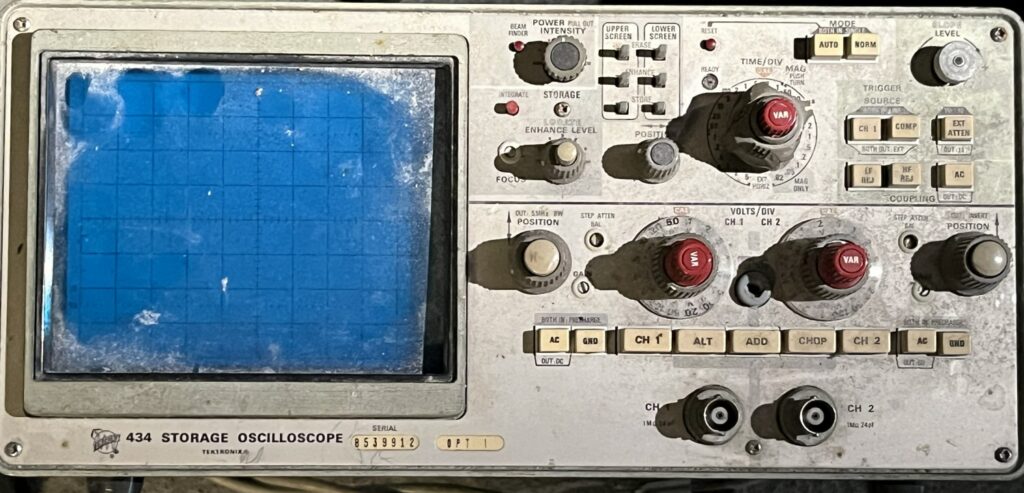
Produced from 1971 to 1984, the Tektronix 434 analog oscilloscope featured a bandwidth of 24 MHz. Online prices range from $100 to $300.
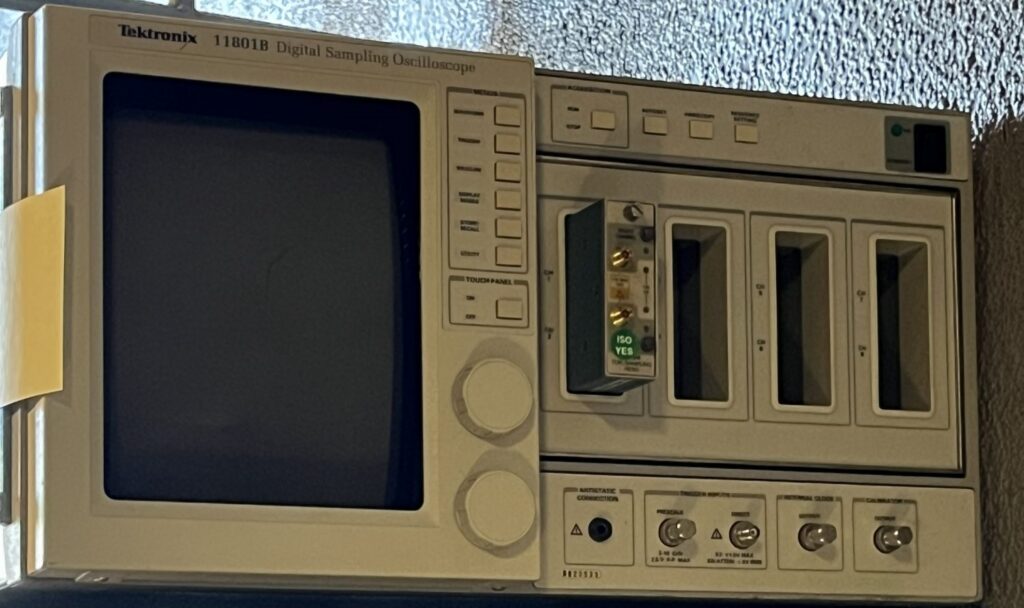
We move into a “modern,” meaning digital, Tektronix 11801B. The 11801 series was produced from 1989 to 1999. That’s brand new by swapfest standards.
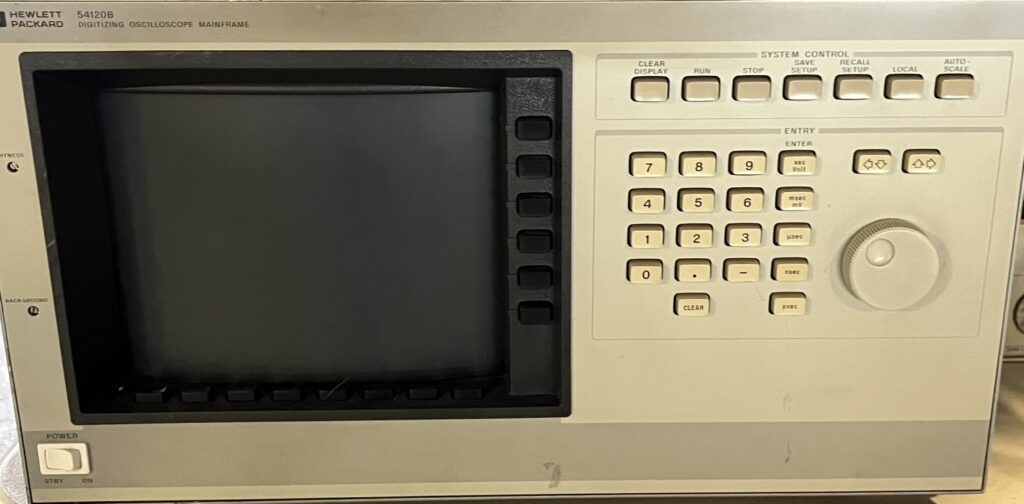
An HP 54120B oscilloscope mainframe. It’s long obsolete, but if you bought one, you can still get documentation.
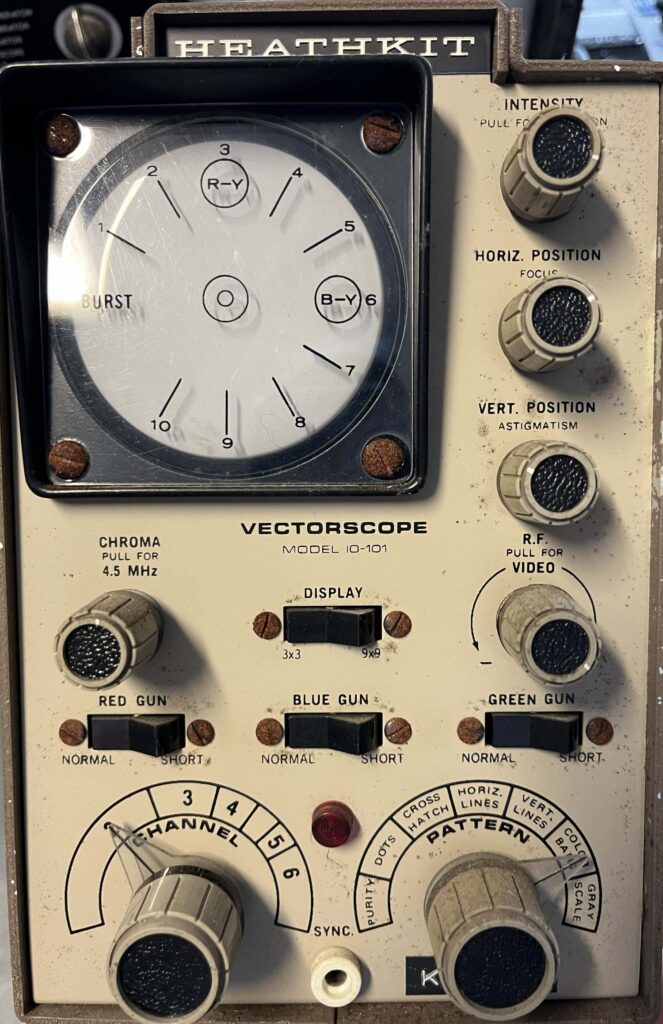
This Heathkit IO-101 Vectorscope was sold in the 1970s.
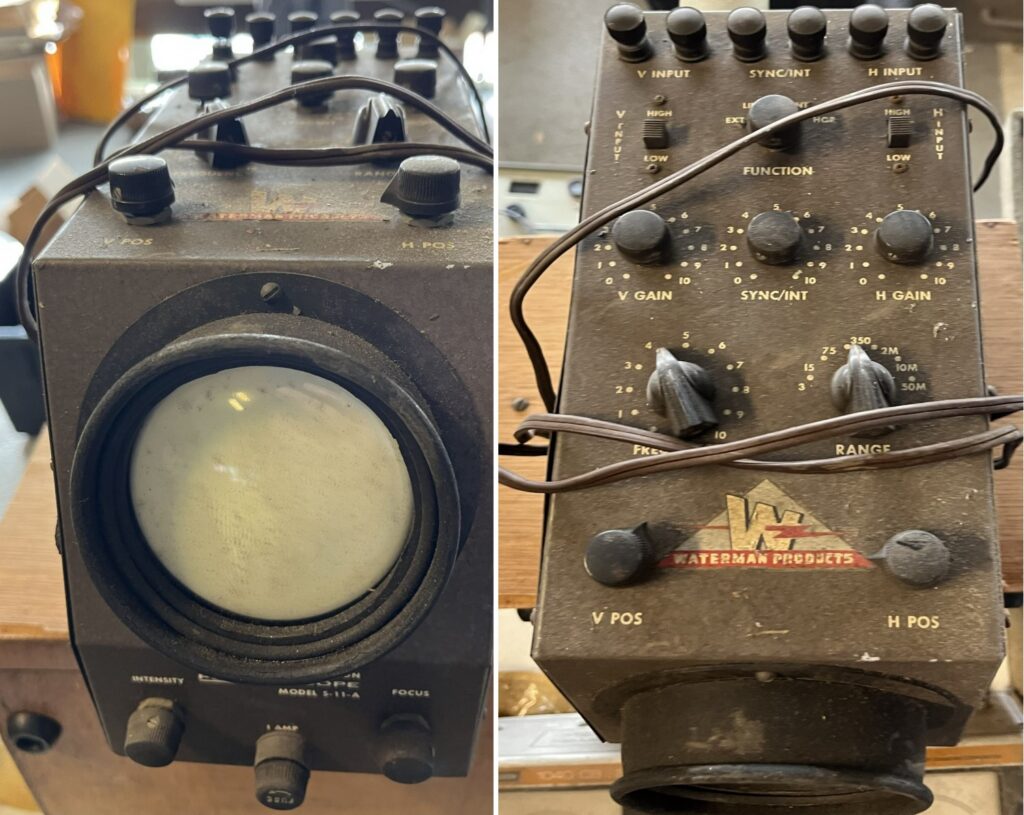
This Pocketscope was manufactured in the 1940s by Waterman of Philadelphia. What do you think of an instrument with the controls on the top?
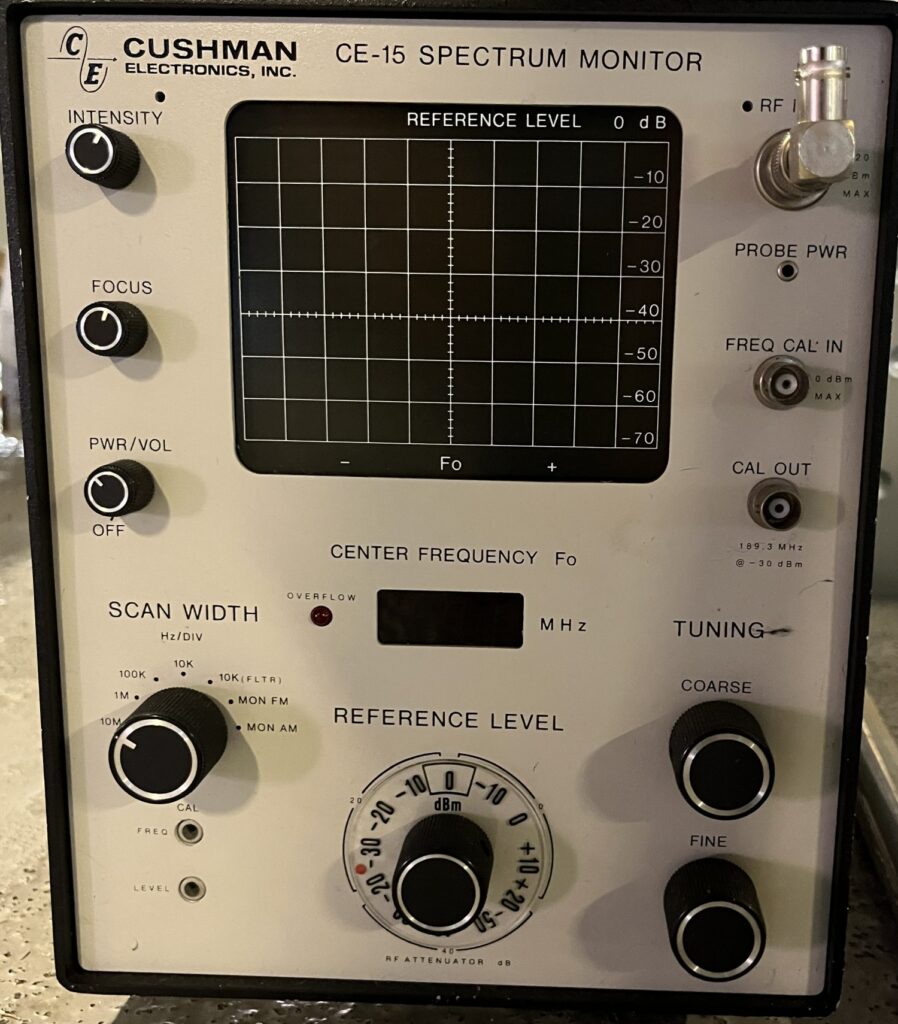
A Cushman CE-15 Spectrum Monitor. Today, we’d call it a spectrum analyzer. This video from 2016 shows on in action.
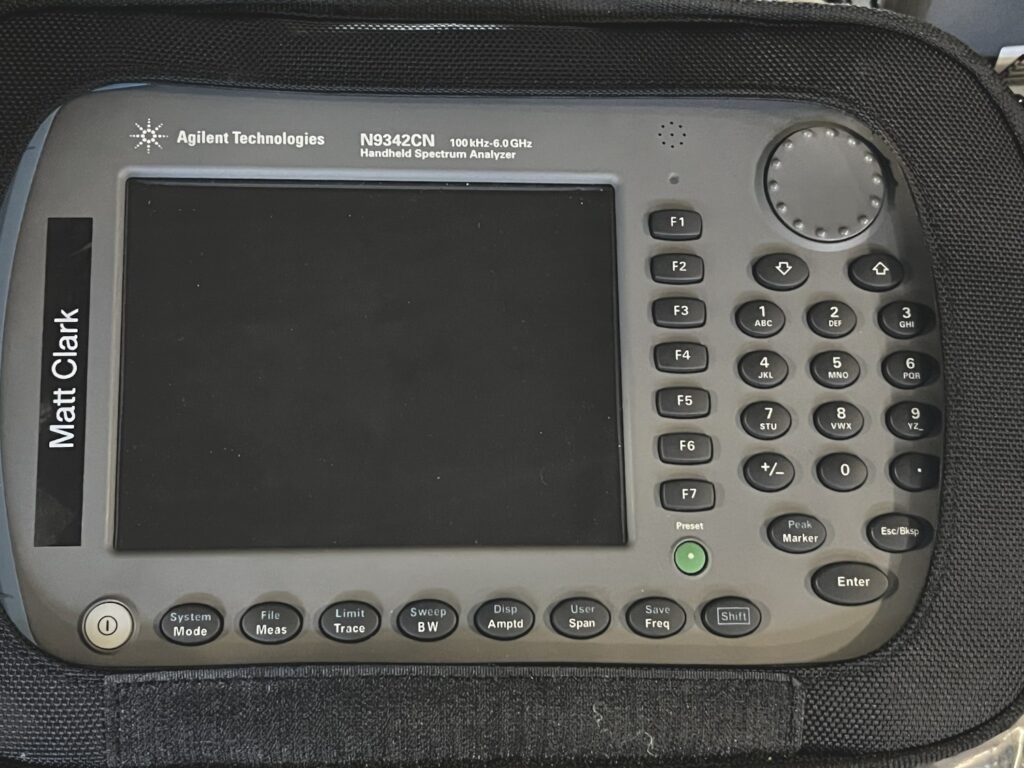
Something relatively new: an Agilent N9342CN handheld spectrum analyzer.
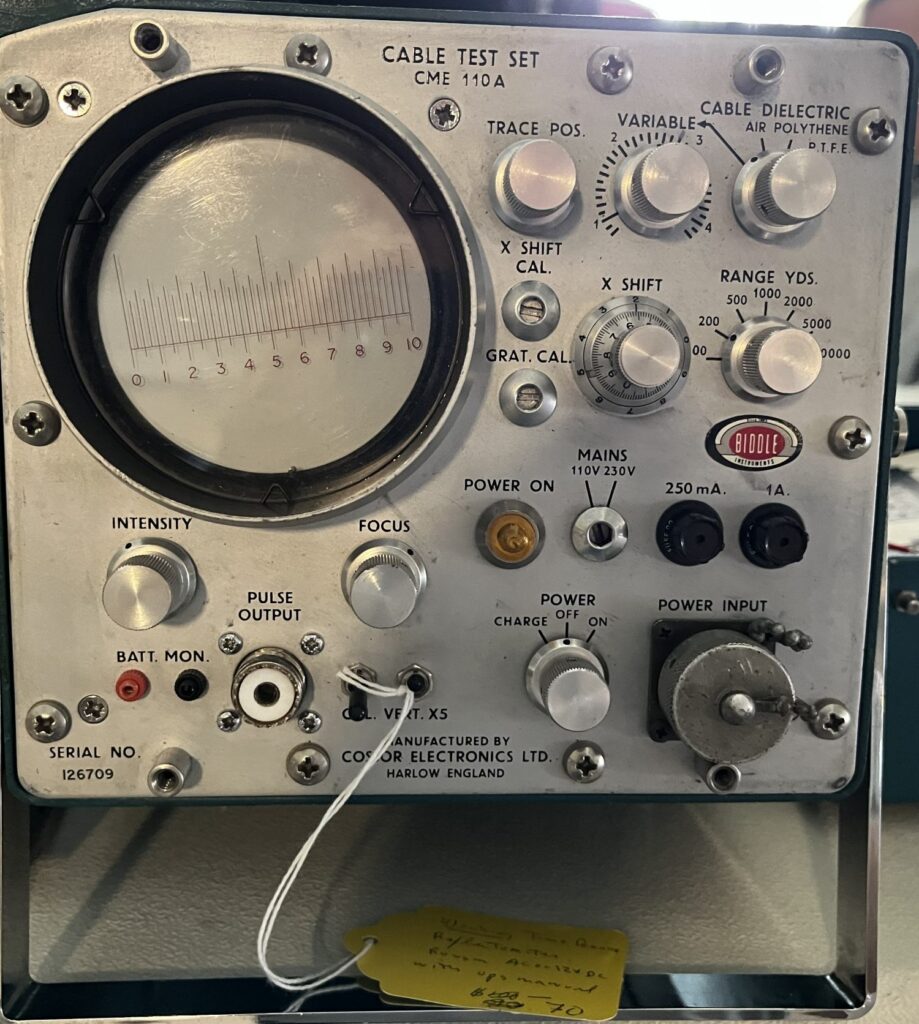
Although it’s a cable tester, this Cossor CME 100A has a CRT screen.
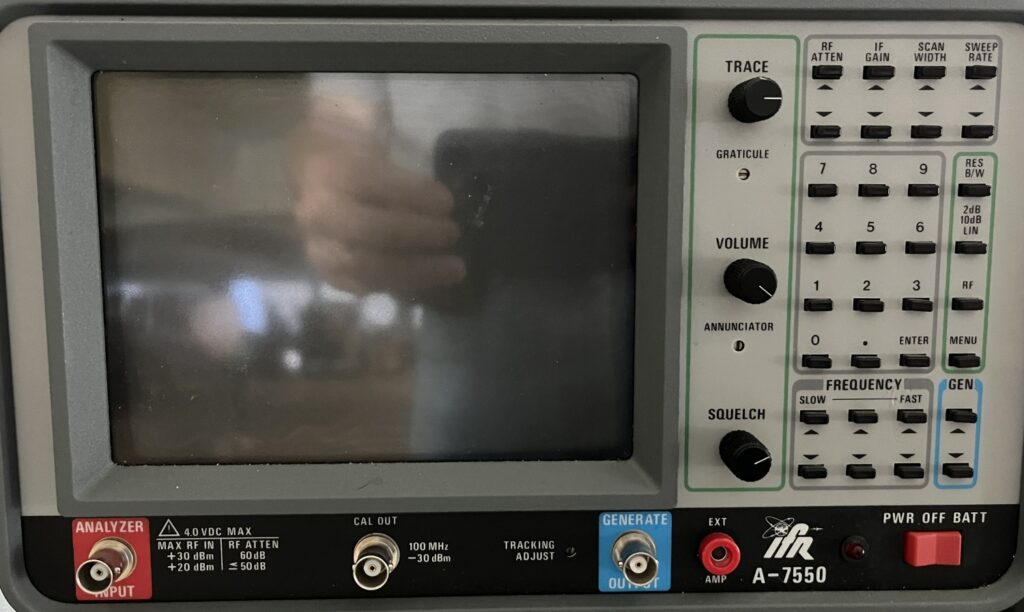
This IFR A-7550 spectrum analyzer also appears under the Marconi and Viavi/Aeroflex names.
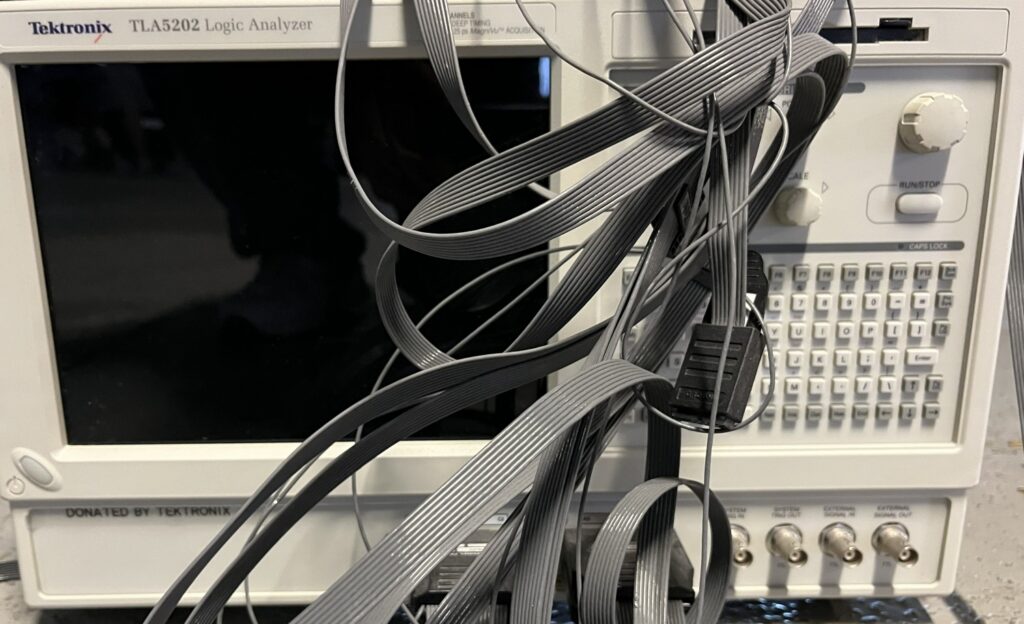
Tektronix provides a manual for this TLA5202 logic analyzer.
Meters, digital and analog
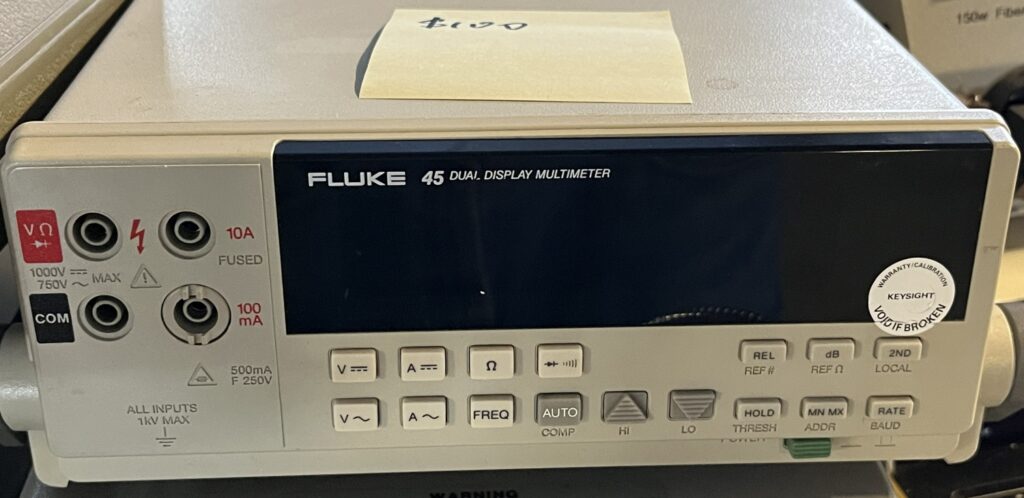
A Fluke 45 DMM, calibrated by Keysight. The seller was asking $100, or you can pay $495 from Calright Instruments for this 5-digit dual-display meter.
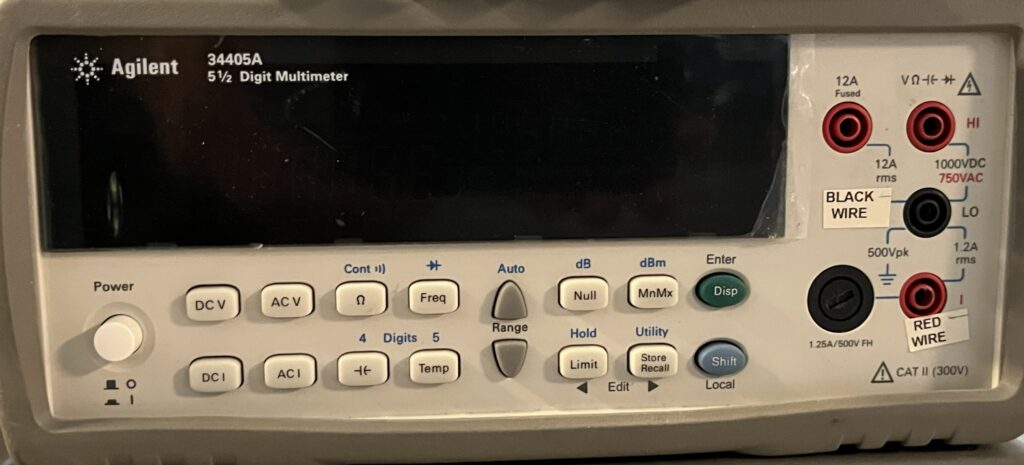
Not to be outdone by the Fluke 45 is this Agilent 34405A 5-1/2 digit DMM. It’s the smaller cousin of the classic 34401A. The seller had two of these meters.
This Agilent 34970A data-acquisition scanner is essentially a multichannel 6-1/2 digit DMM. It holds up to three scanner modules. It was discontinued in 2021.
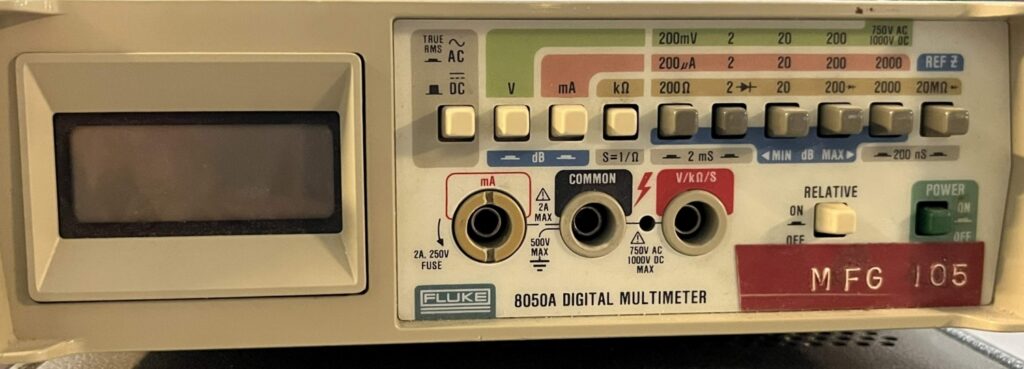
I bought this Fluke 8050A DMM. It’s time to power it up for a tryout and a teardown.
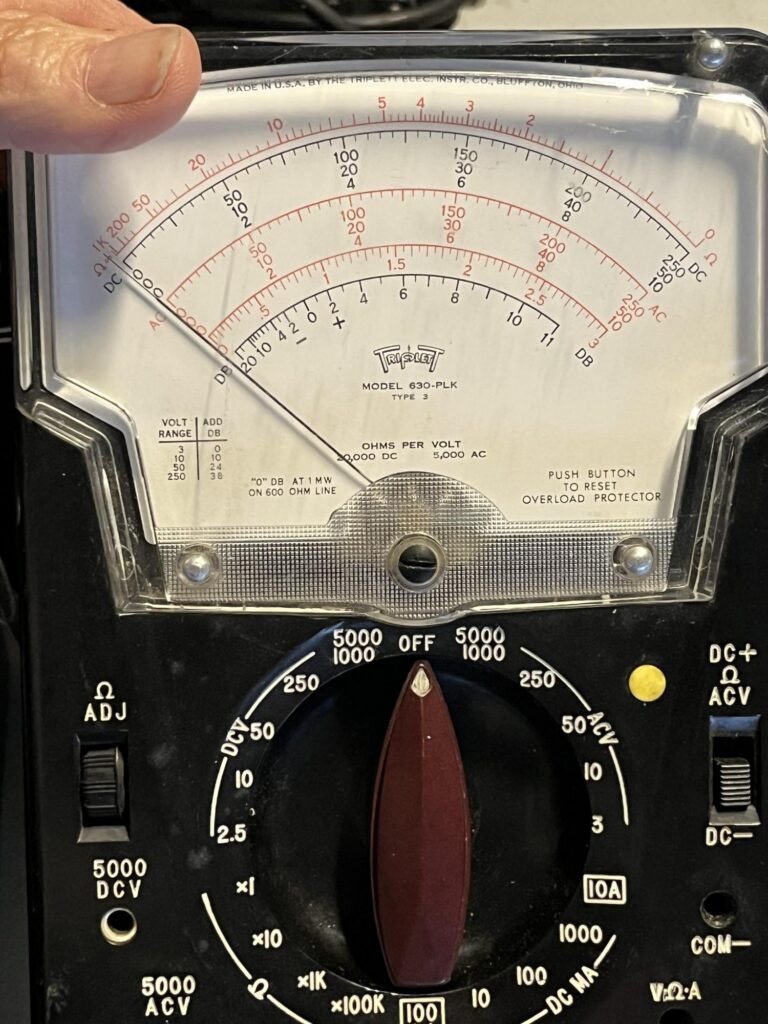
There’s something about an analog volt-ohm meter. It doesn’t have the resolution nor the functions of a DMM, but it’s easy to read. Here is a Triplett 630-PLK:
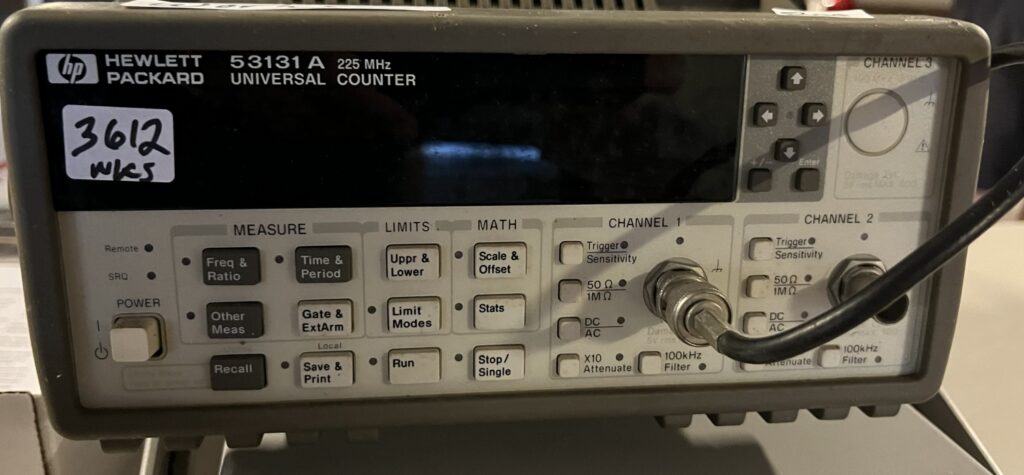
The HP/Agilent/Keysight 53131A 225 MHz counter was discontinued in 2016. It’s the only test instrument I’ve seen at this flea market that made it to Keysight.
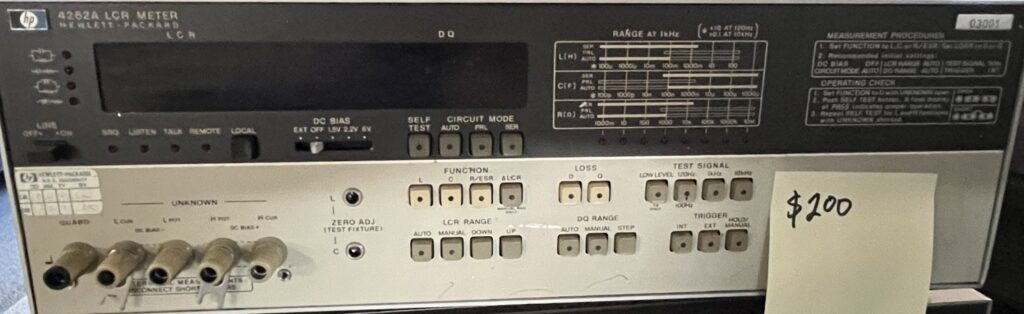
Introduced in 1978, the HP 4262A LCR meter covers DC and six frequencies: 100 Hz, 120 Hz, 1 kHz, 10 kHz, 20 kHz, and 100 kHz. It measures Z, Y, Theta, R, X, G, B, C, L, D, Q, Rdc, N, and M.
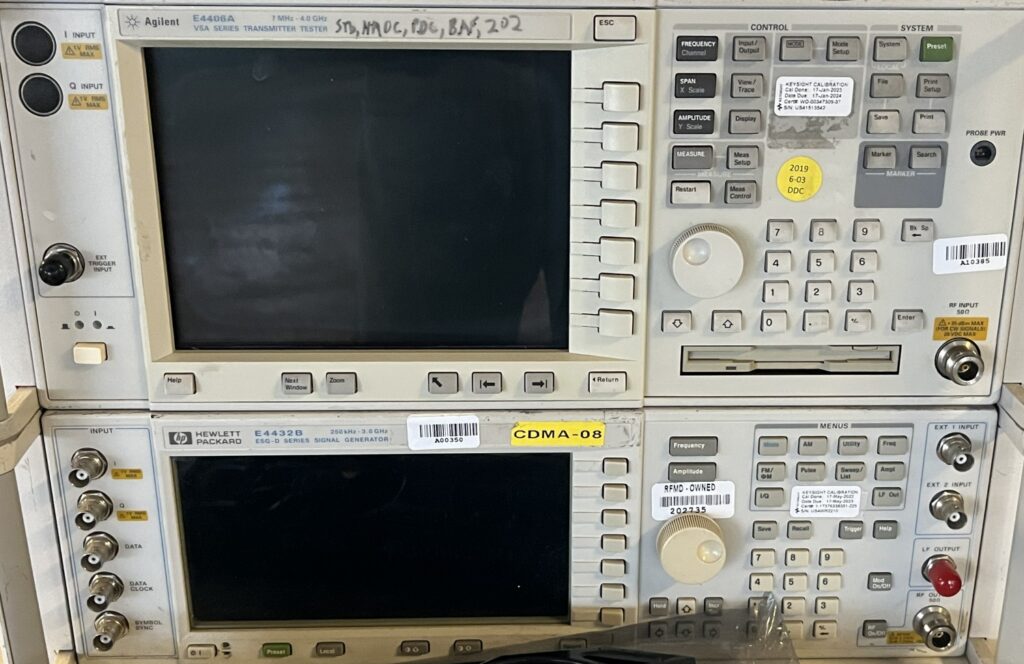
An Agilent E4406A transmitter tester atop an HP E4432A signal generator. What is that slot in the lower right corner of the transmitter tester?
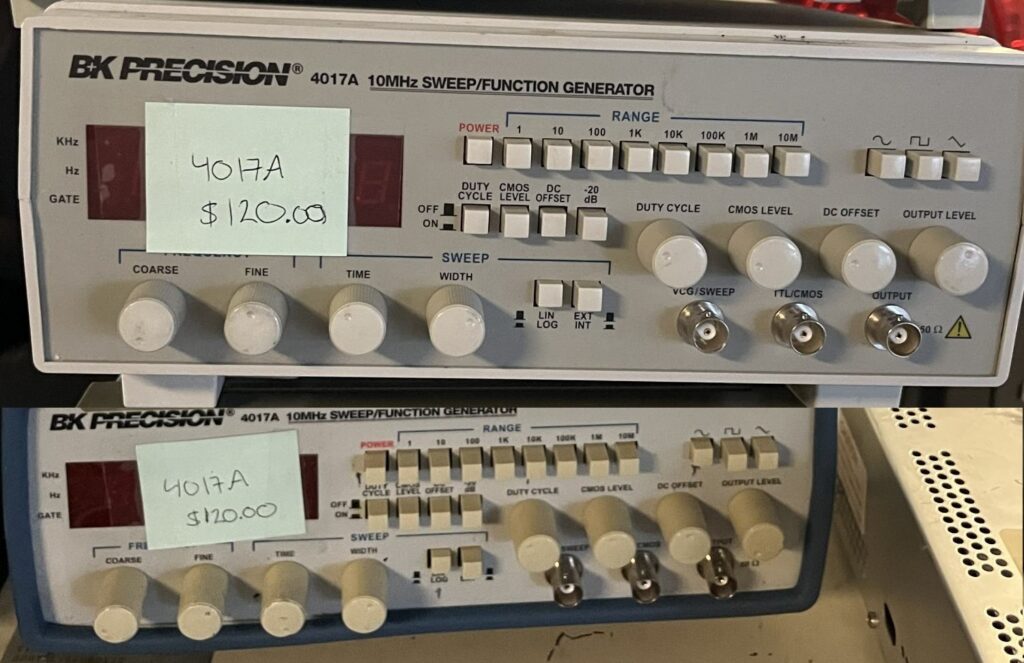
B+K Precision 4017A function generator. Choose your color. Can you spot another difference? Look at the front panels.
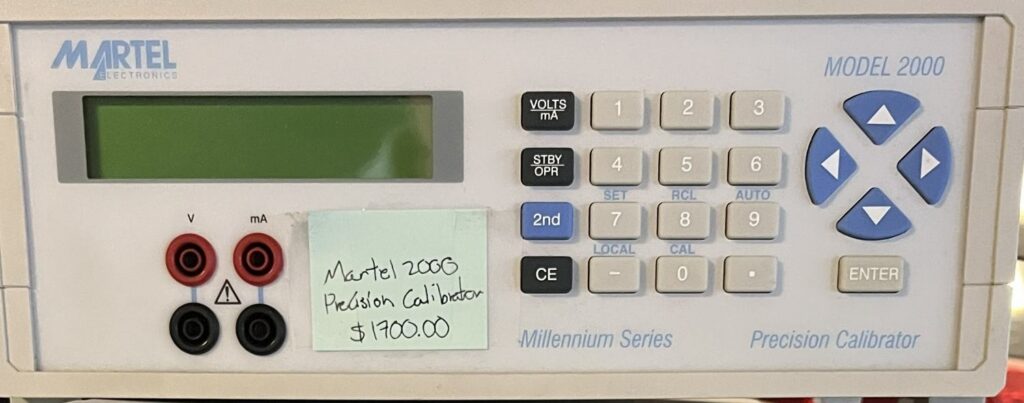
Martel 2000 multifunction calibrator lets you check meters for voltage and current measurements.
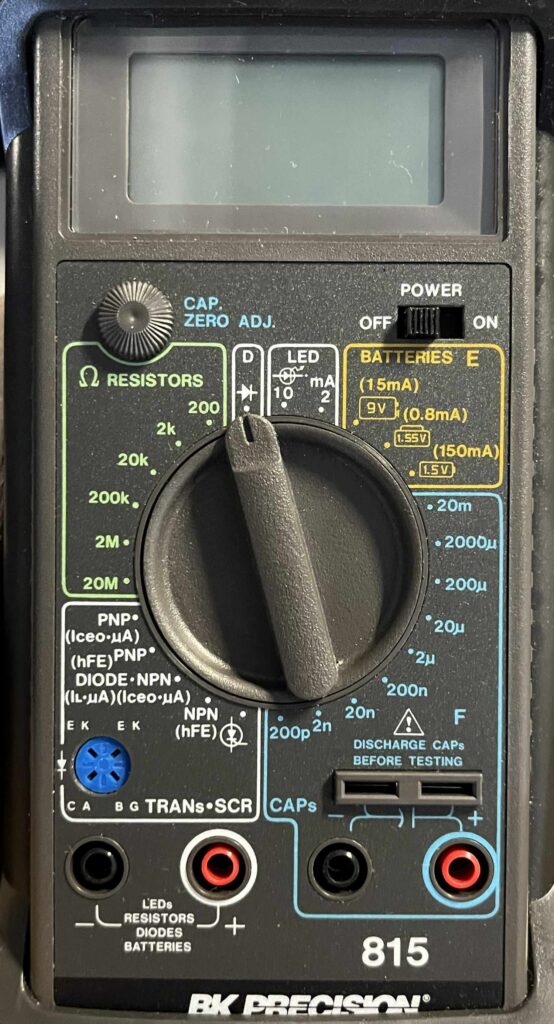
I tried to buy this B+K Precision model 815 parts tester, but the seller and I could not agree on a price. The model 815 tests resistors, capacitors, diodes, transistors, LEDs, SCRs, and batteries. It’s still available new for $133.
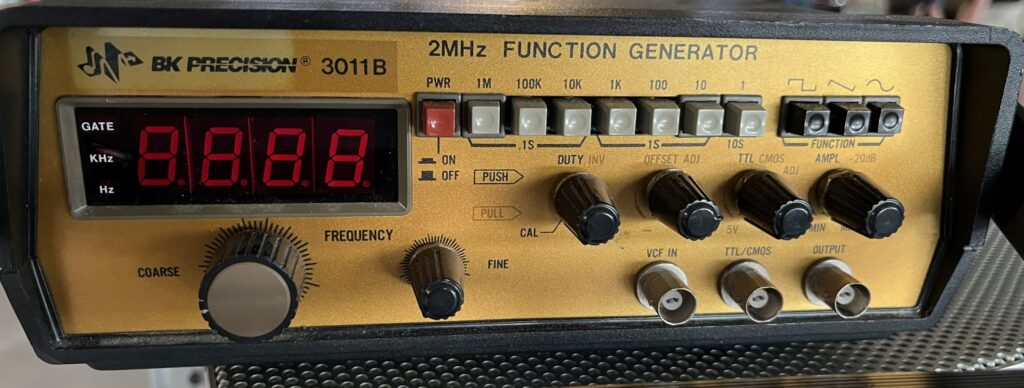
I bought this B+K Precision 3011B 2 MHz function generator for a future teardown. The seller said it works, but only to 200 kHz because of a broken button. Perhaps there’s a workaround or a fix.
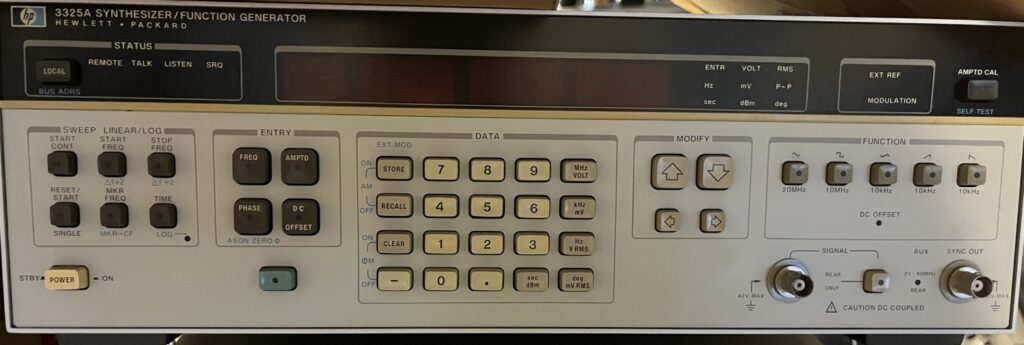
An HP 3325A function generator. The HP Memory Project has a page for the 3325A that includes a block diagram and a photo of a unit with the cover removed.
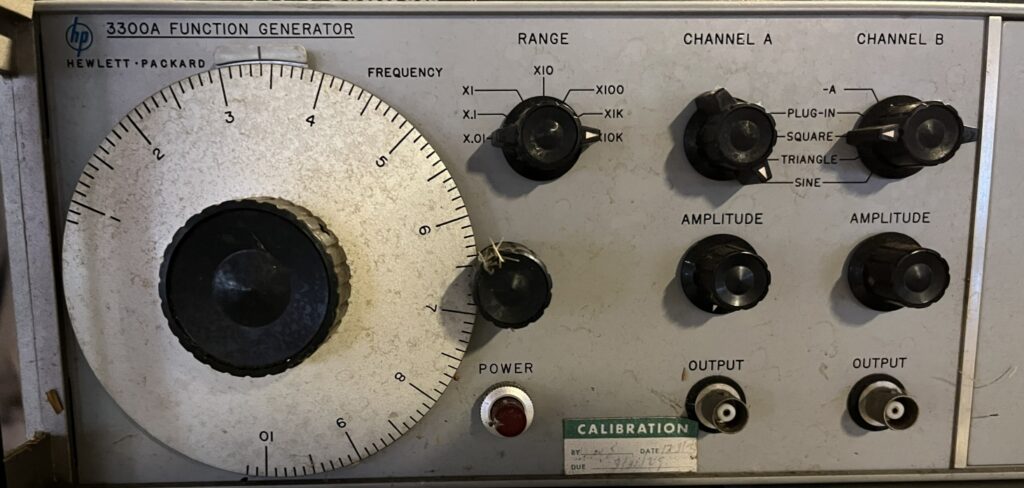
The same page covers the 3300A, released in 1965.
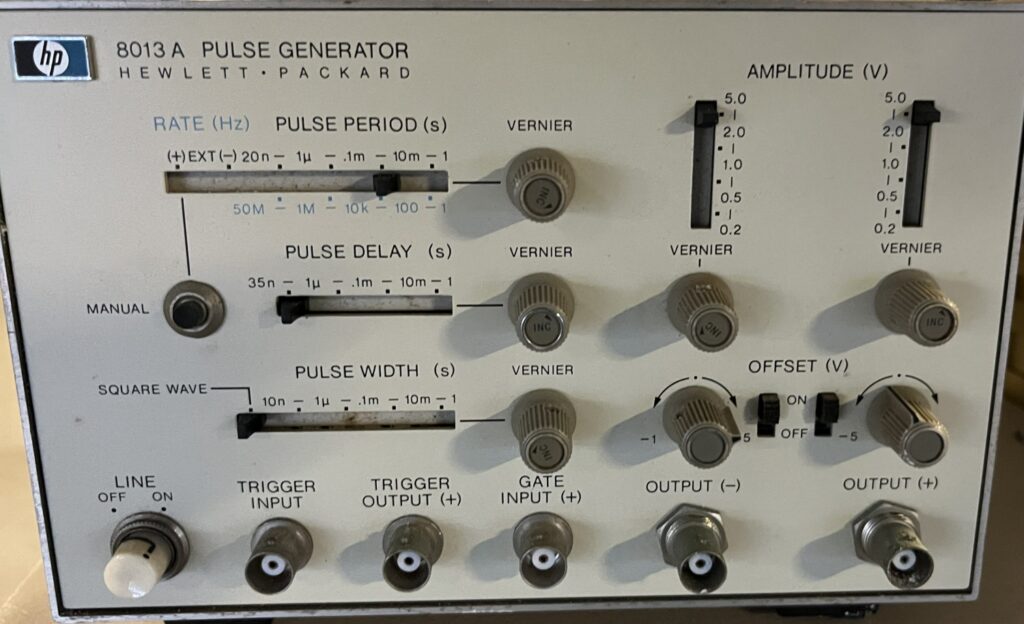
The HP 8013A, not listed in the HP Memory Project, produced pulses to 50 MHz.
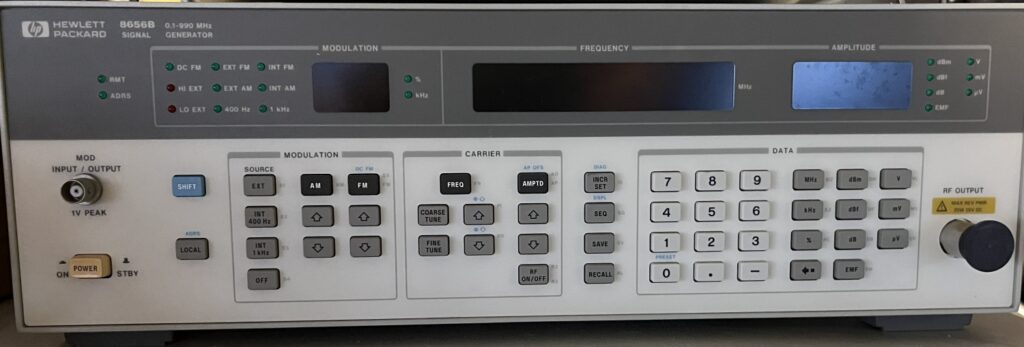
Introduced in 1985, the HP 8656B produced signals from 100 kHz to 990 MHz with 10 Hz resolution.
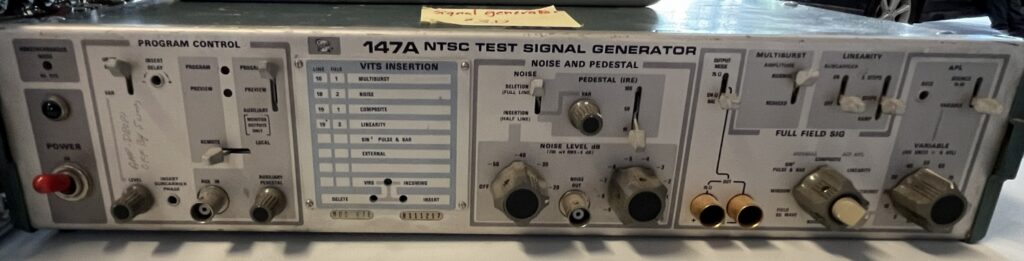
Do you have an analog TV to fix and need a test signal? The Tektronix 147A produces those TV signals.
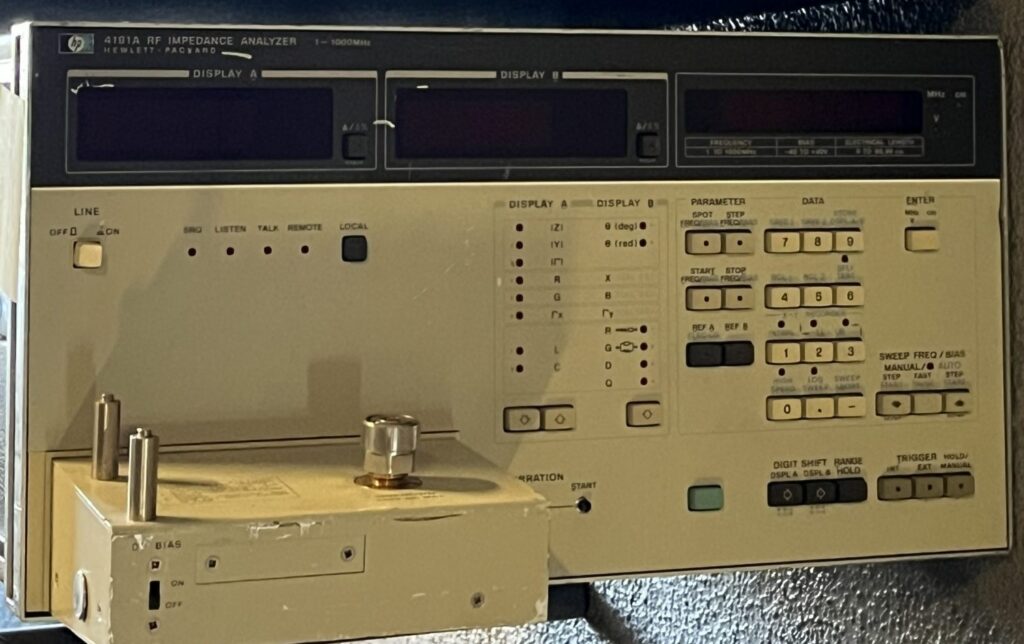
Impedance matters when working with RF signals. That’s where an HP 4191A RF impedance analyzer can help. Released in 1980, the 4191A’s frequency range is 1 MHz to 1000 MHz.
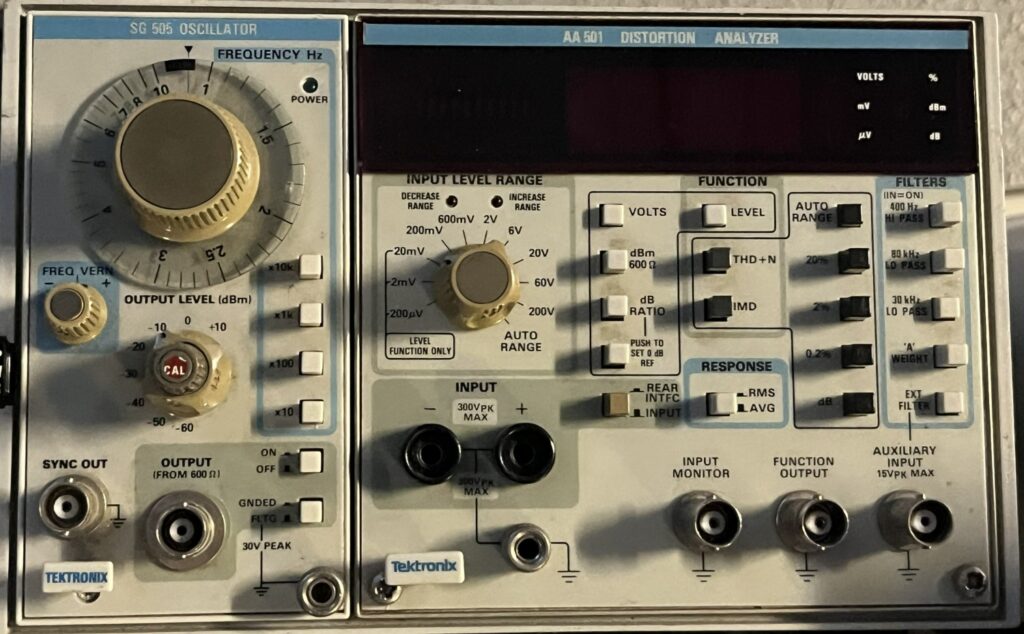
This TM500 modular instruments chassis from Tektronix includes an SG505 ultra-low distortion oscillator and an AA501 audio analyzer. The AA501 was designed by Bruce Hofer, who later went on to form Audio Precision.
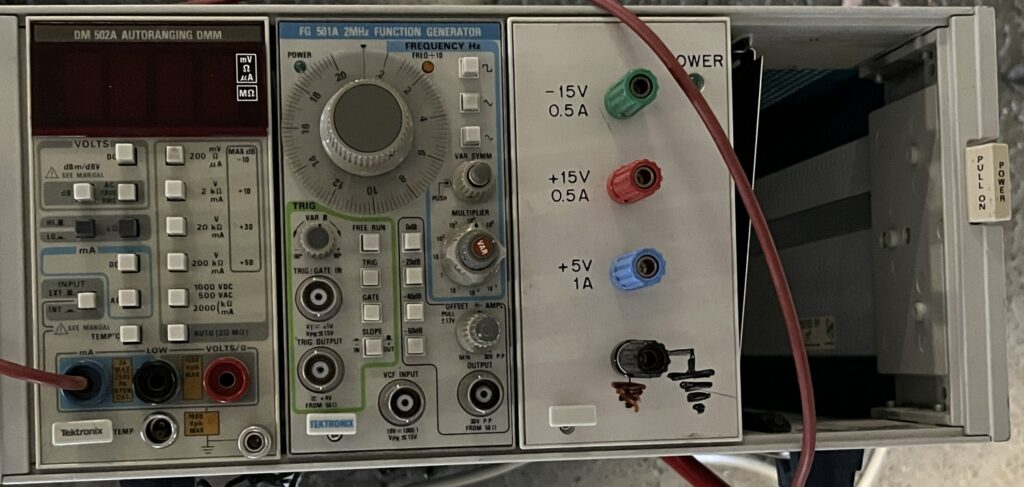
Here’s another chassis, this one containing a DM 502A autoranging DMM and an FG 501A 2 MHz function generator:
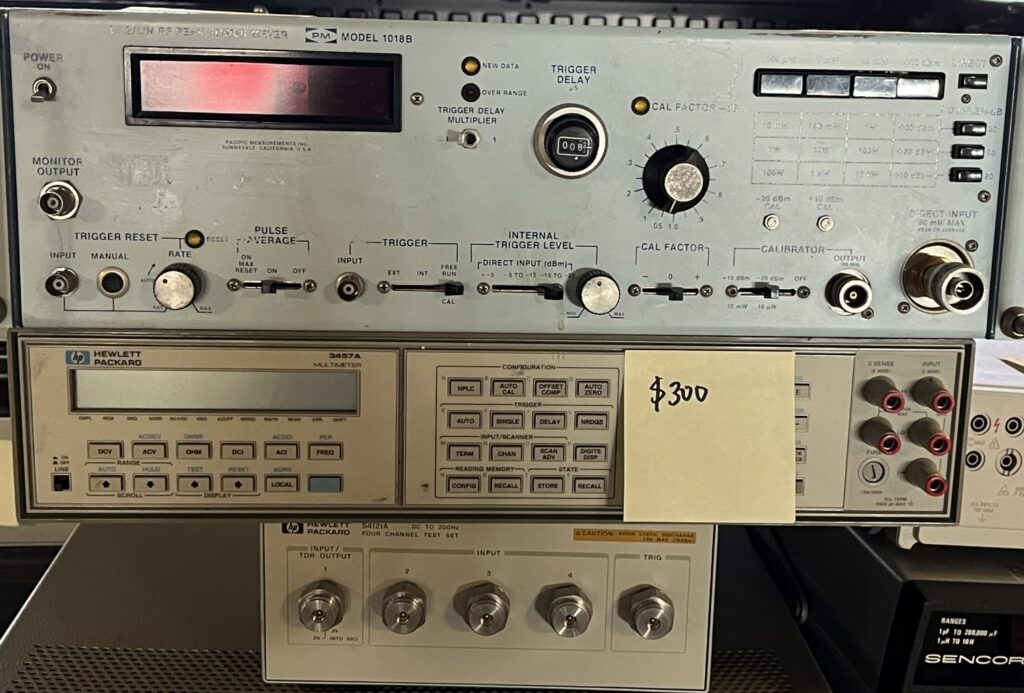
This stack contains a Pacific Measurements 1018B RF peak generator, an HP 3457A multimeter, and an HP 5121A four-channel test set. The 1018B was also sold under the Wavetek name. The 3457A is a 6.5-digit DMM and was the predecessor to the 8.5-digit 3458A, which became the gold standard in calibration labs.
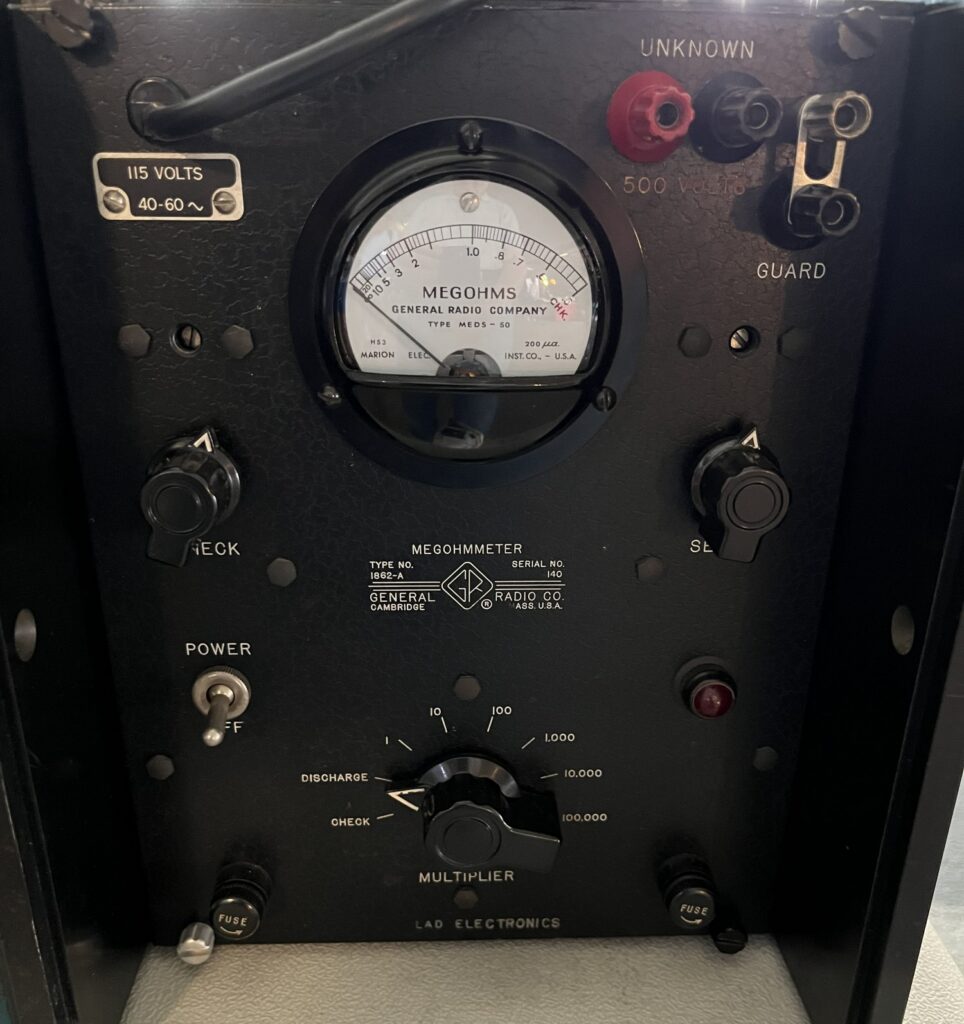
General Radio, later known as Genrad, started in Cambridge before moving to Concord, Mass. And later acquired by Teradyne. This 1862-A megohm meter was introduced in 1951. The link takes you to a detailed description of the instrument, including schematics.
Power supplies
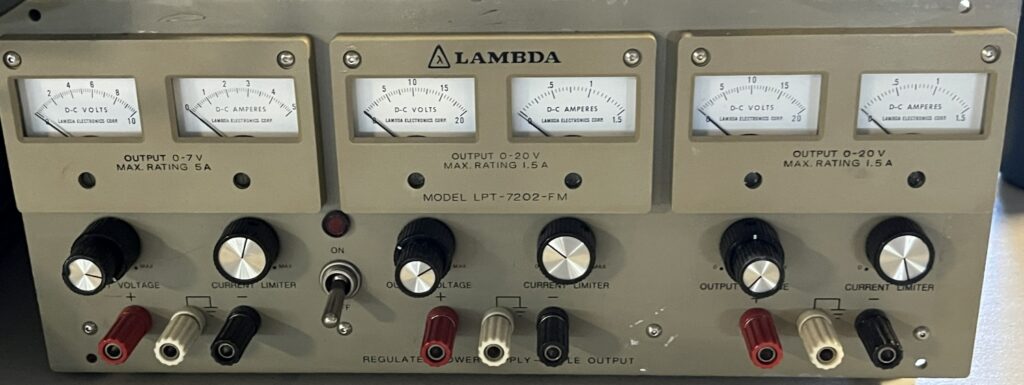
A test bench without a power supply borders on useless. The Lambda (now TDK Lambda) triple output power supply was and still is a staple on many test benches.
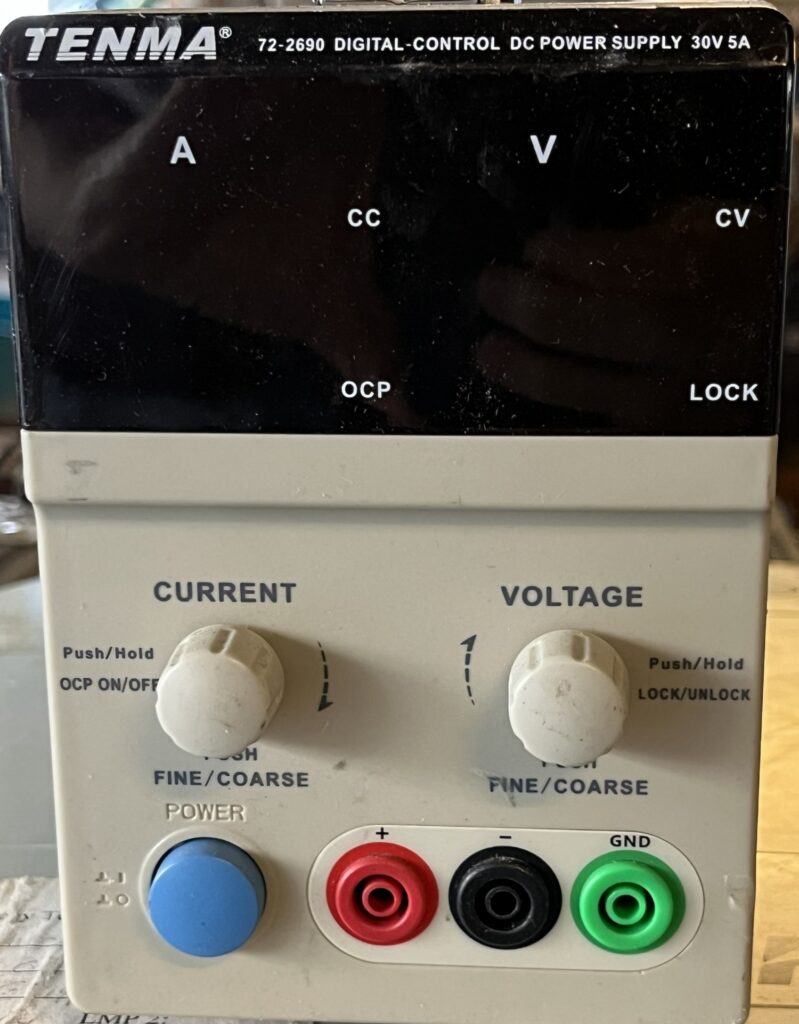
According to distributor Newark, the Tenma 72-2690 30 V, 5A power supply is still available, but you have to call for the price.
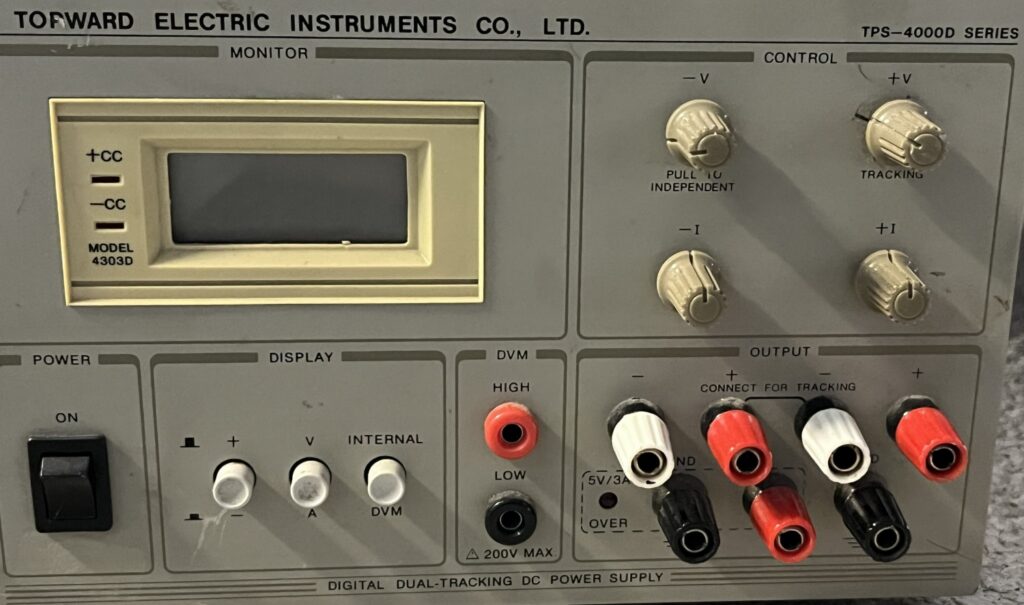
The Topward TPS-4000D bench power supply can produce 0-30 V
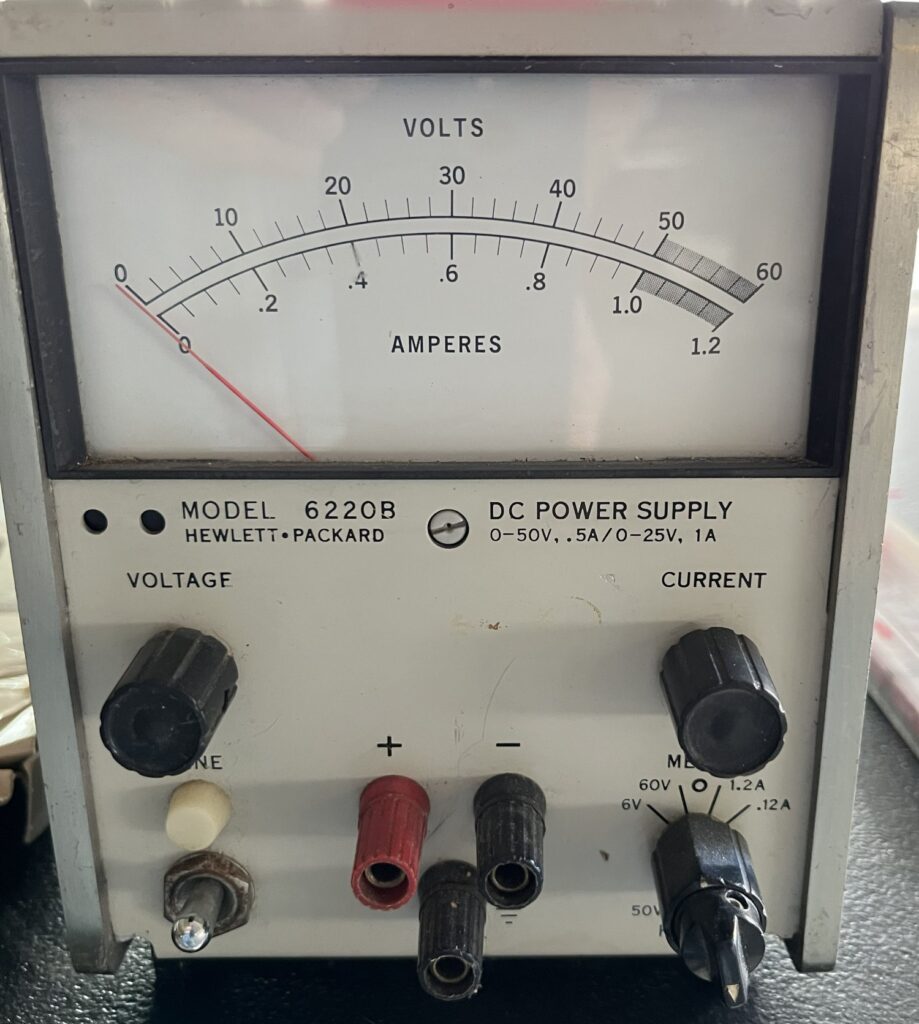
The HP 6220B power supply produces up to 50 V at 1 A. Be careful when searching for this power supply because the current HP uses 6220 as the model number for a printer.
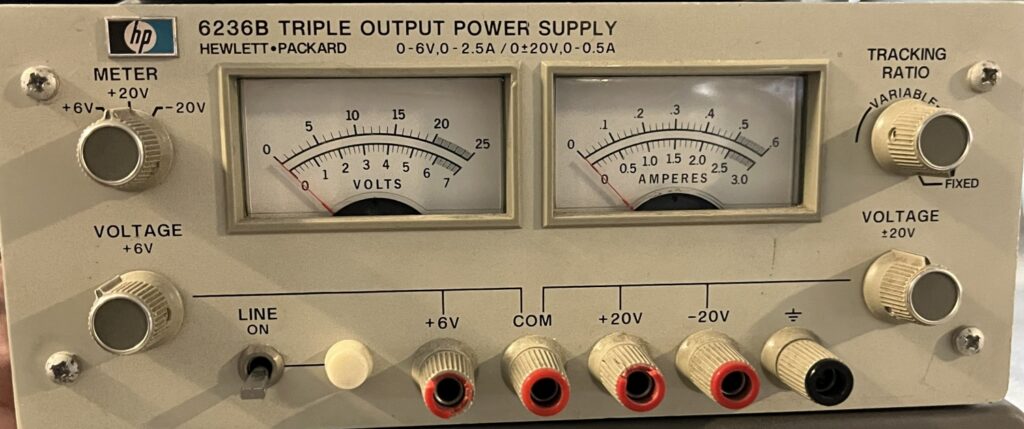
Another classic instrument found on many test benches, the HP/Agilent 6236 is a triple-output power source. Its outputs produce 0 to 6 V at 2.5 A, 0 to +20 V and 0 to -20 V at 500 mA.
Tube testers
Tube testers? Seriously? Yes, engineers, tube testers. See for yourself. One vendor sold tubes. The usual tube seller, who is traditionally the first one you see after paying the entry fee, was missing. There’s a first time for everything.
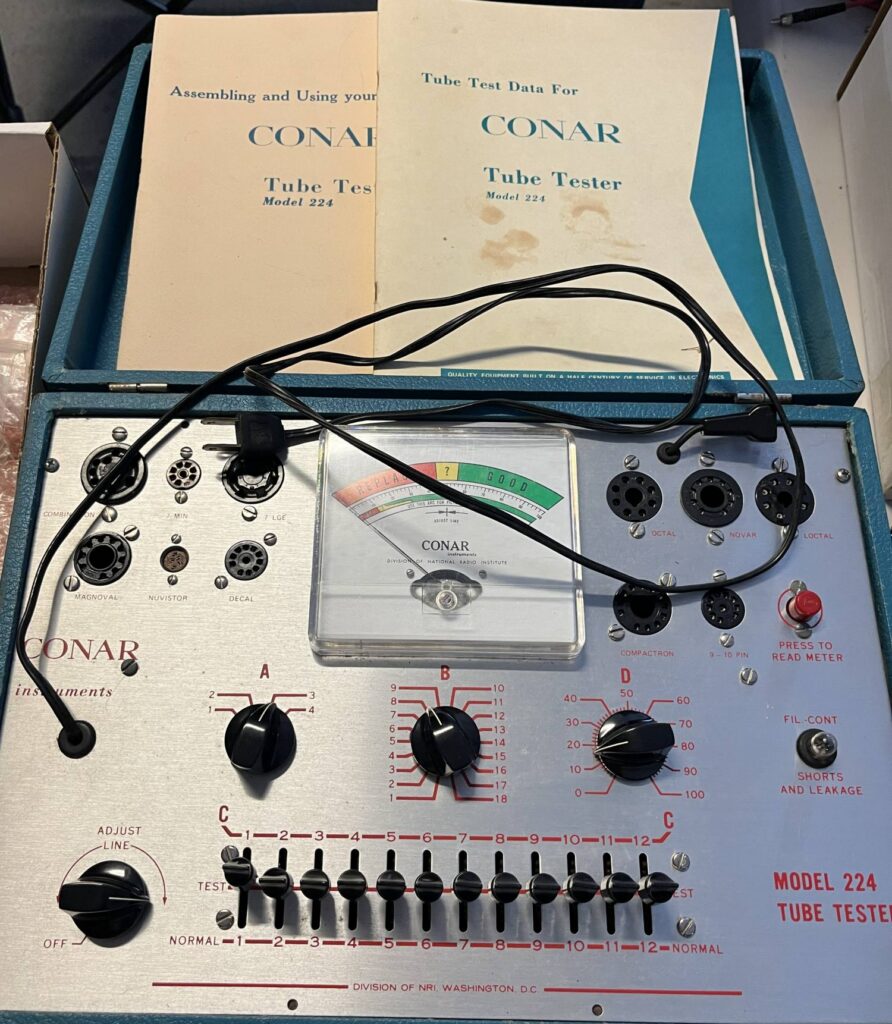
This is a Conar Model 224:
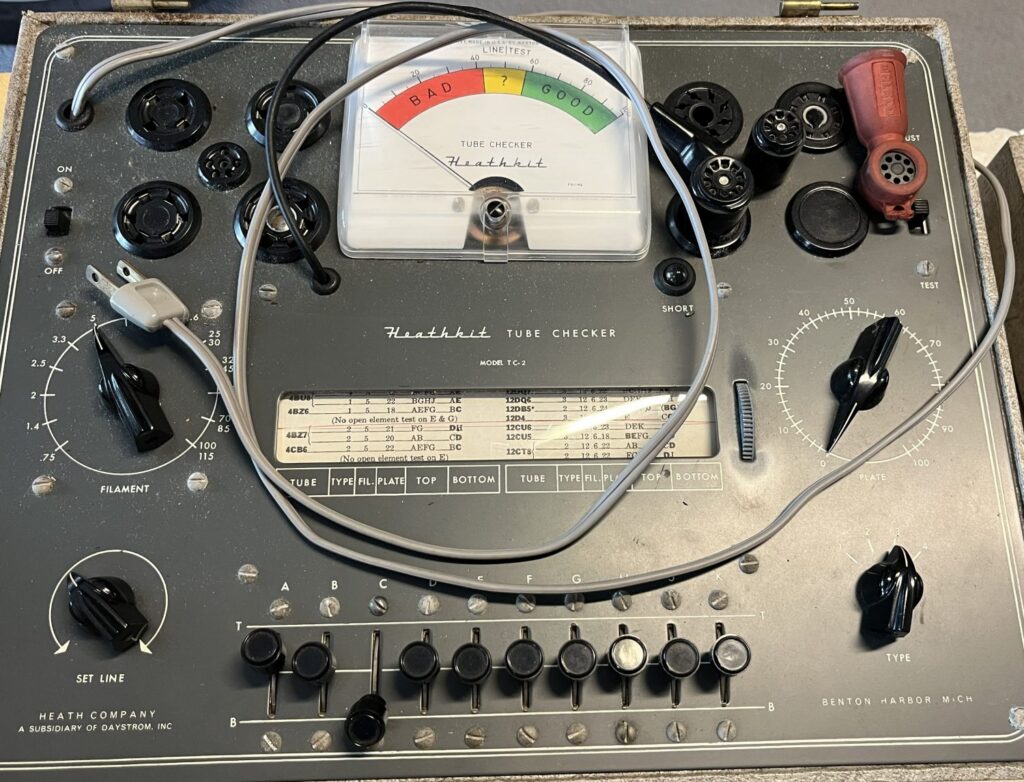
A Heathkit model TC-2:
Odds and ends
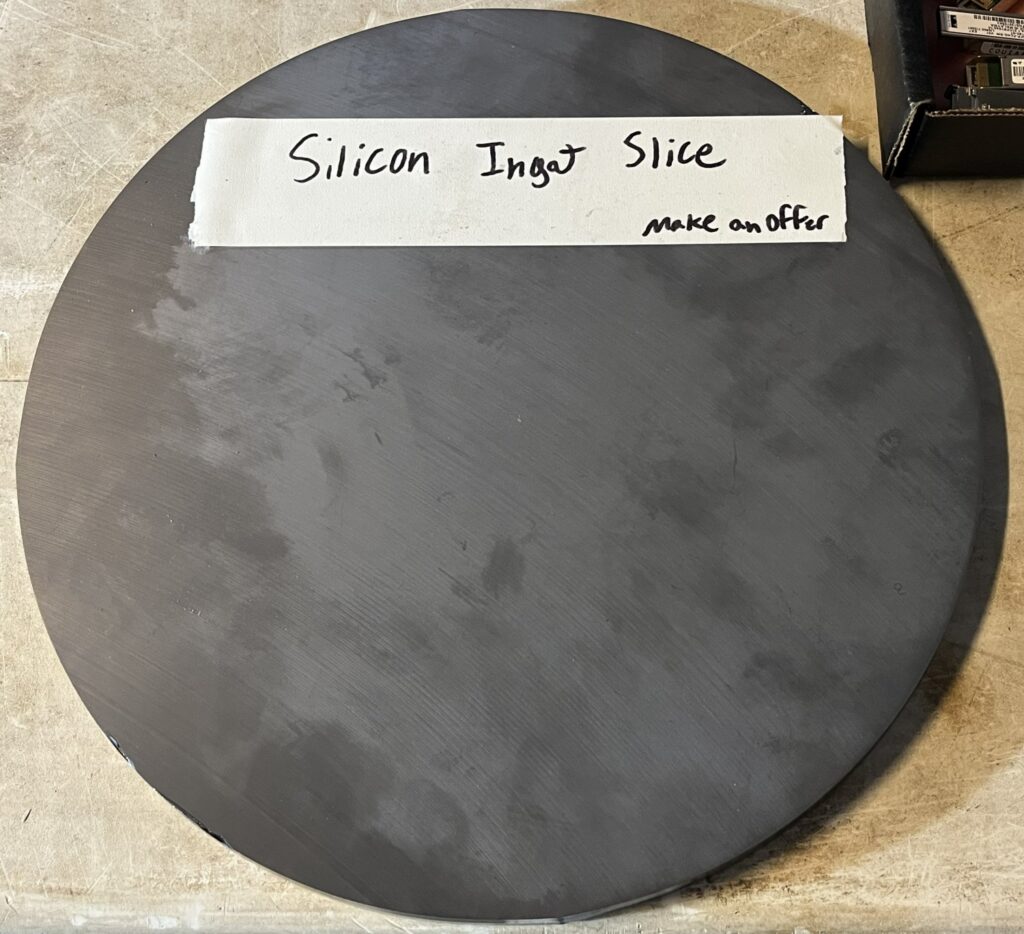
For the real EE do-it-yourselfer, start with your own silicon slice:
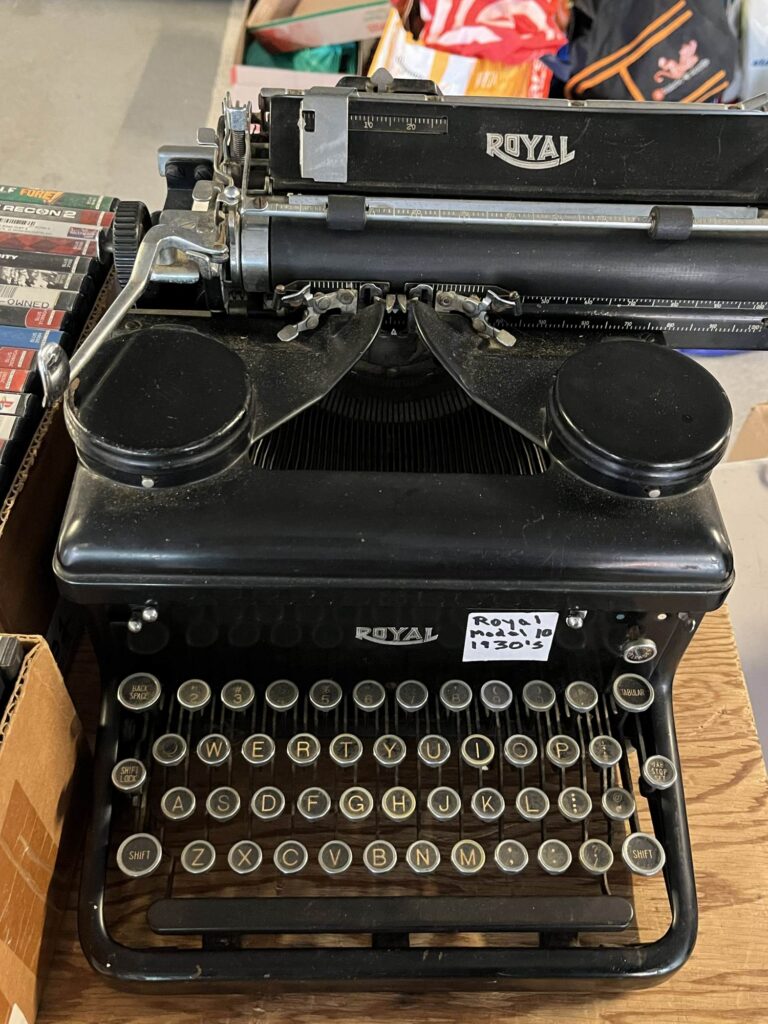
You might want to have a typewriter should your local data center consume all the local electrical power. No power nor software needed here.
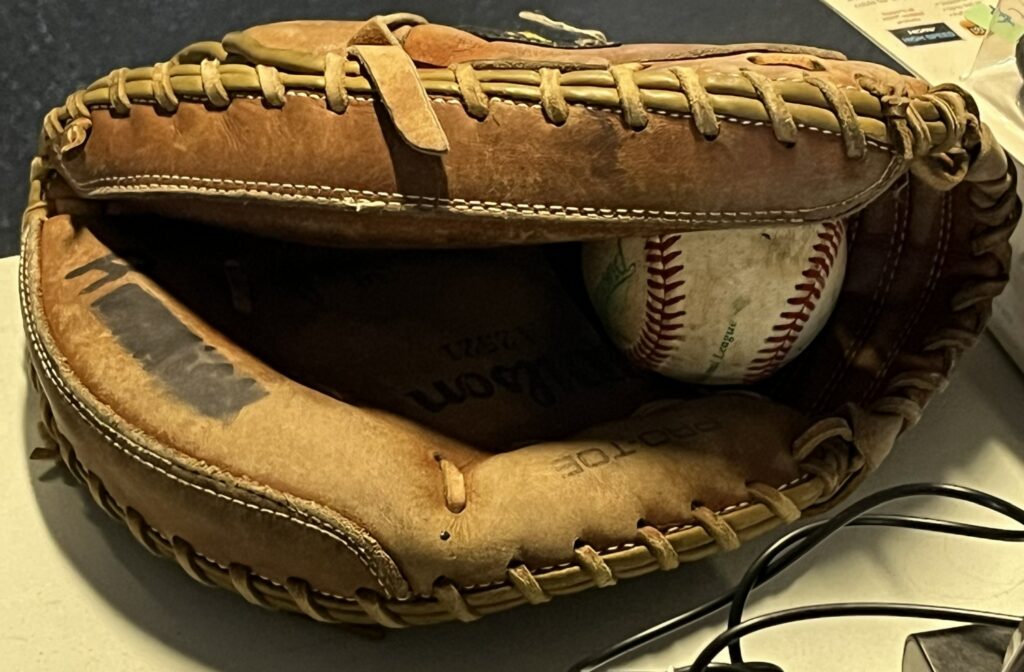
Catch you next year at the 2027 swapfest.
Filed Under: Analog, Products, Test and Measurement
Log in to leave a comment:
Lost your password?
Don't have an account? Register here